Editor’s Choice: The most effective water play ideas for toddlers involve low-pressure, high-sensory activities like DIY water tables, frozen toy hunts, and gentle splash pads that prioritize both thermal regulation and sensory processing development.
The summer heat poses significant challenges for early childhood regulation, making evaporative cooling through play a vital tool for physical comfort.
Water play ideas are not merely distractions; they serve as essential sensory integration tools that help toddlers understand volume, gravity and cause-and-effect in a refreshing environment.
According to pediatric experts, engaging in aquatic activities can lower core body temperature safely while stimulating the vestibular system.
Parents’ Real-life Experiences
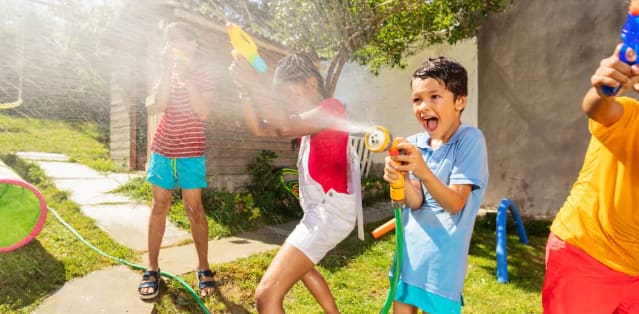
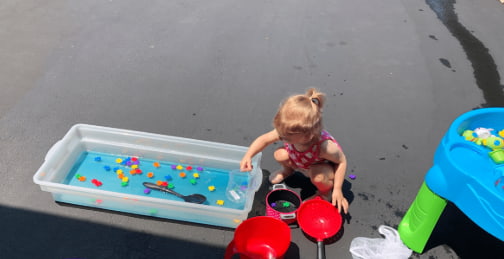
As a parent who has spent countless July afternoons trying to distract a cranky toddler from the heat, I have found that water is the ultimate “reset button.” In my experience, you don’t need expensive equipment; a simple plastic bin filled with lukewarm water and a few measuring cups can provide thirty minutes of focused play.
Many parents worry that their child might get too messy or wet, but seeing the pure joy and the cooling effect on their flushed cheeks makes the extra towel-up time completely worth it.
Science of Sensory Development: Why Plays Matter
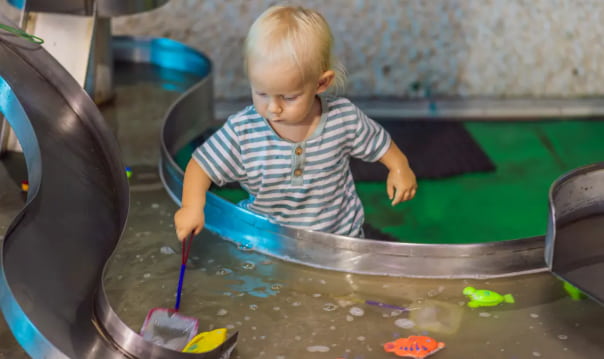
Engaging in water play ideas facilitates bilateral coordination and tactile stimulation, which are critical for a toddler’s growing brain and physical heat management during the summer months.
The integration of water into daily routines offers a unique opportunity for sensory modulation, helping children who may be sensitive to heat to calm their nervous systems.
Experts in child psychology observe that the rhythmic nature of pouring and splashing can have a meditative effect, reducing the cortisol levels that often rise during uncomfortably hot weather.
Thermal Conductivity and Montessori
By focusing on the thermal conductivity of water, parents can provide a consistent cooling source that is far more interactive than sitting in front of an air conditioner. It is observed that children who engage in structured sensory play often demonstrate better emotional regulation during the transition from outdoor to indoor environments.
From a developmental standpoint, the “why” behind water play lies in its ability to offer unstructured exploration without the fear of failure. When a toddler drops a heavy stone and a light leaf into a bucket, they are learning the basics of physics and buoyancy through direct observation.
This type of learning is highly valued in the Montessori method, where the environment serves as the teacher. By intentionally selecting water play ideas that challenge their current skill level, such as using a spray bottle to water plants, you are fostering independence and self-efficacy.
Indoor Splash Zones: Small Scale Water Play Ideas
Indoor water play ideas like high-chair sink play and sensory bins allow for temperature-controlled fun without the risk of UV exposure or heat exhaustion.
High-Chair Sink and Basin Play
Utilizing a high-chair tray with a shallow basin of water is the safest way to introduce fine motor exercises to younger toddlers in a confined, indoor space.
Setting up a small basin on a high-chair tray allows the child to stay seated and focused, making it easier for parents to supervise the activity while preparing a meal. You can add a drop of food coloring or some natural bubble bath to make the water visually stimulating and fragrant, which enhances the multisensory experience.
Many parents find this setup helpful because it limits the “splash zone” to a manageable area that can be easily cleaned with a single towel. This controlled environment is perfect for practicing the “pincer grasp” by asking the toddler to pick up floating blueberries or small plastic rings.
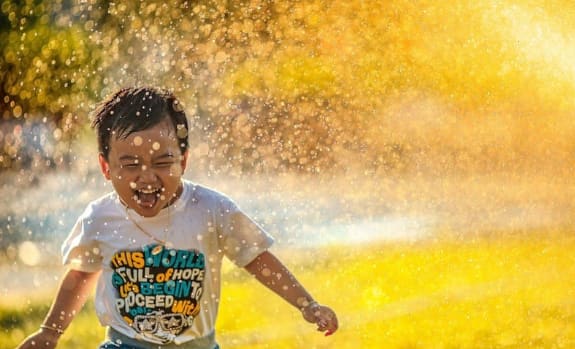
Frozen Treasure Toy Hunt
Freezing small toys inside large ice blocks creates a long-lasting thermal play activity that teaches toddlers about states of matter and patience.
This activity involves placing small, waterproof toys like plastic dinosaurs or colorful beads into a container, filling it with water, and letting it freeze overnight. The next day, you place the large ice block in a deep tray and give the toddler warm water and a dropper to “rescue” the toys.
This process demonstrates thermodynamics in its simplest form as the child watches the ice melt under the heat of the water. Many parents enjoy this because it is a “slow-burn” activity that keeps the child occupied for a significant amount of time while keeping their hands cool.
Experts suggest that this specific activity is great for problem-solving skills as the child figures out that pouring water on specific spots speeds up the melting process. You might notice your child getting frustrated if the ice doesn’t melt fast enough; this is a great moment to practice patience and persistence together.
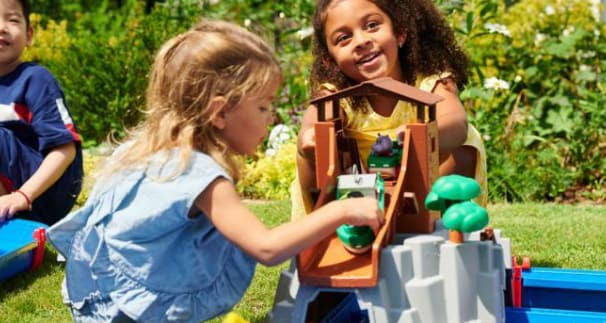
Activity Type and Age Group Table
Using safe tools like a plastic hammer or a sturdy spoon can also incorporate gross motor movements into the indoor play session.
| Activity Type | Best Age Group | Sensory Focus | Setup Effort |
| Ice Excavation | 24+ Months | Temperature & Texture | High (Prep needed) |
| Kitchen Sink Play | 12+ Months | Fine Motor & Pouring | Low |
| Bubble Foam Bin | 18+ Months | Visual & Tactile | Medium |
| Sponge Squeeze | 12+ Months | Grip Strength | Very Low |
Outdoor Adventures: Expanding Your Water Play
Outdoor water play ideas maximize the benefits of evaporative cooling and allow for larger gross motor movements that are not possible inside the home.
DIY Water Tables and Gravity Runs
Creating a DIY water table using PVC pipes or recycled containers encourages spatial awareness and an early understanding of fluid dynamics.
You don’t need to buy a fancy plastic table to give your toddler a world-class experience; a series of plastic cups taped to a fence at different heights can create a wonderful “waterfall” effect. As the toddler pours water into the top cup and watches it travel down the line, they are engaging with cause-and-effect reasoning.
Many parents feel that outdoor play is more stressful due to the sun, but setting this up in a shaded area or under a large umbrella provides the perfect balance. This setup allows for weight distribution lessons as the child feels the difference between a full pitcher and an empty one.
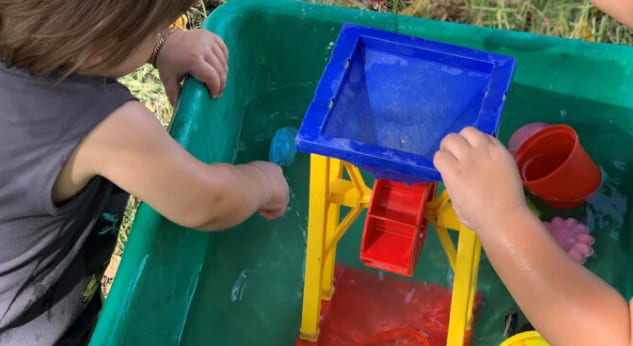
Gentle Sprinklers and Splash Pads
Low-pressure splash pads are preferable to high-pressure hoses for toddlers as they provide a predictable, gentle cooling surface that minimizes the startle reflex.
A dedicated toddler splash pad is a shallow, inflatable mat that sprays small streams of water upward, allowing the child to run through or sit and splash safely. Unlike a traditional backyard sprinkler that might be too strong, these are designed for the height and sensitivity of young children.
Many parents worry about their child slipping, so it is important to place these on a flat, grassy surface rather than a patio. These pads encourage gross motor skills like jumping, stomping, and running, which are essential for burning off energy before nap time during the long summer days.
Safety Guidelines and Hydration: Expert Tips!
Prioritizing water safety supervision and consistent hydration is the most critical aspect of implementing any water play ideas during high-temperature months.
Safety must always come first, as even a few inches of water can pose a risk to a curious toddler who is still mastering their balance. Constant, “eyes-on” supervision is the gold standard recommended by the American Academy of Pediatrics (AAP) to prevent accidents during play.
Many parents find it helpful to designate a “water watcher” who isn’t distracted by phones or chores to ensure the environment remains secure. It is observed that accidents often happen in the blink of an eye, so having your towels and snacks ready before the play begins helps you stay present and focused on your child’s movements.
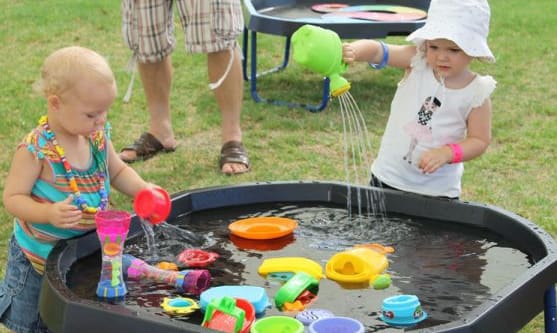
Water Temperature and Dermatology Experts
In addition to physical safety, monitoring the water temperature is essential to prevent both “cold shock” and overheating from sun-warmed hoses. Water sitting in a garden hose can reach scalding temperatures in the summer sun, so always run the water for a minute to ensure it is cool before letting it touch your child’s skin.
Many parents are surprised by how quickly a toddler’s skin can react to temperature changes, so testing the water on your own wrist first is a wise practice. According to dermatology experts, toddlers have thinner skin that is more susceptible to both burns and the drying effects of chlorinated or hard water.
Sustainable Eco-Friendly Toddler Aquatic Activities
Adopting eco-conscious water play ideas like rain harvesting and “greywater” gardening teaches toddlers about environmental stewardship and resource conservation.
Using water sustainably doesn’t mean the fun has to stop; it just means being more intentional about where the water goes after the play session is over. For example, once the sensory bin activity is finished, you can invite your toddler to help you “feed the thirsty plants” by pouring the leftover water into the garden.
This simple act turns a cleanup chore into a lesson in ecology and responsibility. Many parents feel a sense of “water guilt” during droughts, and this circular approach allows for guilt-free play that benefits the local ecosystem while keeping the child cool.
Water Play Ideas and Chemical Footprint
According to environmental educators, introducing concepts of sustainability at a young age helps build a lifelong habit of respecting natural resources.
Using non-toxic, wooden, or recycled plastic toys instead of cheap, single-use plastics also reduces the chemical footprint of your playtime. It is observed that children enjoy the “job” of being a garden helper, which builds their sense of autonomy.
By choosing biodegradable soaps for bubble play, you ensure that the runoff doesn’t harm the soil or the insects living in your backyard. This holistic approach ensures that your water play ideas are as kind to the planet as they are to your toddler.
FAQ and Answers Water Play Ideas for Kids!
What is the best time of day for outdoor water play?
According to safety experts, it is best to avoid the peak sun hours between 10:00 AM and 4:00 PM. Early morning or late afternoon sessions are ideal for using water play ideas as the UV index is lower and the air is slightly cooler.
How can I keep water play safe for a child who still puts everything in their mouth?
For “mouthers,” focus on edible-safe water play by using plain water, large ice blocks made from filtered water, and avoiding small toys or chemical-heavy bubbles.
Is it okay to use a public splash pad for a toddler?
Public splash pads are generally safe and provide excellent socialization opportunities, but parents should be mindful of water quality and crowded spaces.
How do I prevent my toddler from getting too cold during water play?
Even in summer, toddlers can get chilled if they are wet for too long. Limit sessions to 30 minutes and have a dry, warm towel ready for an immediate wrap-up.