Editor’s opinion: Pediatricians generally recommend mineral-based sunscreens containing zinc oxide or titanium dioxide for babies’ sunscreen safety, as they sit on the skin and act as a physical barrier rather than absorbing UV rays like chemical filters, significantly reducing the risk of irritation.
Navigating the aisles of a pharmacy as a new parent, trying to decipher complex ingredient labels, can feel overwhelming. You aren’t alone if you find yourself holding two bottles of sunscreen and wondering which one will best protect your little one without causing a reaction.

From a Parent’s View
It is completely normal to feel anxious about exposing a baby’s sensitive skin to new products. Through my own journey as a parent, I have learned that the “best” product isn’t always the most expensive one, but the one that aligns with the natural needs of a developing immune system and skin barrier.
Understanding Sunscreen Safety for Babies
The primary safety distinction between sunscreen types lies in their mechanism of action, where mineral sunscreens are widely considered safer for infants because they provide an immediate physical shield on the skin’s surface, avoiding the chemical reactions associated with traditional formulas.
Chemical filters function by absorbing UV radiation, converting it into heat, and releasing it from the skin, which may lead to unwanted side effects in sensitive users. Experts suggest that minimizing ingredient absorption is key to maintaining dermatological health in the first year of life.
Many parents are surprised to learn that not all sunblocks are created equal, especially when it comes to the active ingredients involved in UV protection. When you apply a chemical sunscreen, the active components must be absorbed into the top layer of the skin to do their job effectively, which necessitates a waiting period before they become active.

Right Protection and Balancing
This process involves a complex interaction with the skin’s biological environment, which is significantly more permeable in babies than in adults, potentially increasing the risk of systemic absorption of these chemical compounds.
Choosing the right protection requires balancing efficacy with gentle care, as your baby’s skin is still developing its protective barrier. While regulatory bodies approve many chemical filters for general use, the unique vulnerabilities of infant skin mean that parents often opt for the path of least resistance.
By understanding the functional differences between these categories, you can better navigate the confusing landscape of skincare products and prioritize long-term skin health over convenience or aesthetic finish.
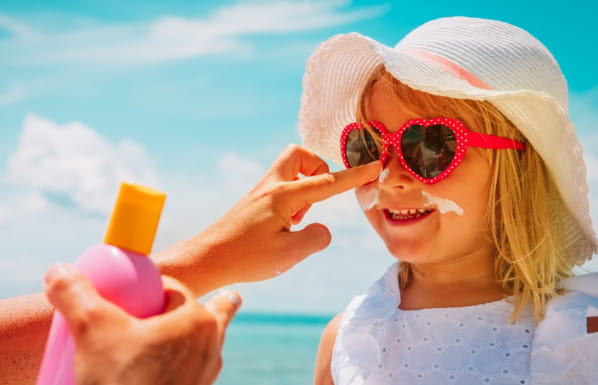
Mechanisms of Chemical Filters
Chemical filters, often containing ingredients like oxybenzone or avobenzone, operate by absorbing ultraviolet (UV) light and undergoing a chemical change to dissipate that energy, a process that experts have linked to potential skin irritation in infants.
Because these products rely on complex chemical reactions to neutralize radiation, they are generally less recommended for babies under six months of age compared to non-reactive alternatives.
These formulations are popular among adults because they are typically clear, lightweight, and easy to spread without leaving a white residue. However, the requirement for absorption means that the ingredients are interacting with the skin cells directly, which can be problematic for a child whose skin is still learning to regulate itself.
Pediatricians often advise against these formulas for infants precisely because of this high interaction rate and the potential for triggering contact dermatitis.

Benefits of Mineral Filters for Sensitive Skin
Mineral sunscreens, also known as physical sunscreens, utilize zinc oxide or titanium dioxide to form a protective layer on the surface of the skin, effectively bouncing UV rays away before they can penetrate.
This approach is highly favored by dermatologists for infants because these minerals are chemically inert and do not require skin absorption to provide protection, making them ideal for the sensitive skin of a baby.
Beyond the reduced risk of irritation, these mineral-based options offer immediate protection from the moment they are applied to the skin. This immediate efficacy is a significant advantage when dealing with a wiggling baby who has limited patience for pre-application wait times.
By prioritizing physical blockers, you provide an external shield that respects the natural integrity of your baby’s epidermis, ensuring safety and comfort during outdoor play.

Essential Sunscreen Safety for Babies
Identifying safe sun protection starts with rigorous label reading, prioritizing fragrance-free and hypoallergenic mineral formulas that avoid harsh chemicals. Experts strongly suggest looking for products that are formulated specifically for infants, as these are more likely to have undergone testing that ensures they are gentle enough for fragile skin barriers.
When in doubt, consulting with your pediatrician about the specific product ingredients is the most reliable way to ensure safety.
The chemical landscape of skincare is vast, and many standard products contain additives like preservatives, fragrances, and parabens that are unnecessary and potentially harmful to a baby. Avoiding these additives reduces the overall chemical burden on the infant’s body, which is a core tenant of preventative pediatric care.
A simple, clean ingredient list is almost always superior to a complex one, as it lowers the mathematical probability of an allergic reaction or skin sensitization.

Key Ingredients to Look for in Baby Sunscreen
When selecting the right bottle, prioritize formulas that explicitly list zinc oxide or titanium dioxide as the active, primary ingredients. These are the gold standard for non-nano mineral protection, meaning the particles are large enough not to be absorbed into the bloodstream, a critical factor for maintaining the long-term dermatological safety of your infant.
Always scan the label for the absence of “potential irritants,” which include parabens, phthalates, and synthetic fragrances. Many brands now cater to the “natural” market, but it is wise to confirm that the brand has undergone rigorous safety testing specifically on pediatric populations.
Focusing on these high-quality, physical-blocking ingredients ensures you are giving your baby the best defense against harmful UV radiation without introducing unnecessary systemic risks.

Best Practices for Sunscreen Application
To maximize effectiveness, apply a generous layer of mineral sunscreen to all exposed areas of your baby’s skin at least 15 minutes before heading outdoors.
Experts observe that most parents tend to under-apply sunscreen, which significantly reduces the effective SPF, so ensure that you are covering areas often missed, such as the tops of feet, ears, and the back of the neck.
Reapplication is essential, especially if the baby has been sweating, swimming, or playing in sand that might rub the product off. Generally, you should aim to reapply every two hours, regardless of the water-resistance label on the bottle.
This consistent habit not only ensures continuous protection against solar damage but also helps in keeping the skin moisturized and protected from environmental stressors that might otherwise compromise the skin barrier.
Choosing a broad-spectrum sunscreen with an SPF (Sun Protection Factor) of 30 to 50 is the most effective way to protect your baby from both UVA and UVB rays. While higher SPF numbers exist, experts suggest that the incremental increase in protection above 50 is minimal, and what matters more is the consistent application and the quality of the mineral ingredients used to create the barrier.
Sun protection is a pillar of preventative health, and understanding the distinction between UVA and UVB rays helps you understand the goal of your sunscreen. UVA rays are associated with long-term skin damage, while UVB rays are the primary cause of sunburns.
A broad-spectrum product is non-negotiable because it addresses both, ensuring that your baby is shielded from the full range of solar radiation that can compromise their developing skin health.
Decoding SPF and Broad-Spectrum Coverage
Broad-spectrum coverage means the product protects against both UVA and UVB rays, which is critical for preventing cellular damage in infants. When you see a label claiming “Broad Spectrum,” it confirms the manufacturer has tested the product to ensure it provides balanced protection across the ultraviolet light spectrum, which is essential for maintaining skin health in the long term.
While SPF measures the level of protection against UVB rays, it does not inherently account for UVA rays, making the “broad-spectrum” label the most important indicator of quality. Parents should not be misled by extremely high SPF numbers, which can create a false sense of security.
An SPF between 30 and 50 is widely recognized as the “sweet spot” for efficacy, providing sufficient protection while allowing for a formulation that is less likely to be greasy or irritating.

Recognizing Potential Allergic Reactions
Even with the safest mineral filters, it is wise to perform a patch test on a small area of your baby’s skin—such as the forearm—to monitor for any signs of an allergic reaction like redness or rashes.
If you observe any inflammation, discontinue use immediately and consult a pediatrician to identify if the reaction was caused by the active mineral ingredients or an inactive additive like a preservative or botanical extract.
Mineral vs. Chemical Sunscreen Comparison
| Feature | Mineral Sunscreen | Chemical Sunscreen |
| Active Ingredients | Zinc Oxide, Titanium Dioxide | Oxybenzone, Avobenzone, etc. |
| Mechanism | Physical barrier (reflects UV) | Absorbs UV and converts to heat |
| Absorption | None (sits on skin) | High (absorbs into skin) |
| Suitability for Babies | Recommended (Low irritation) | Generally discouraged |
| Effectiveness | Immediate | Needs 15-20 min to activate |
Frequently Asked Questions (FAQ)
Can I use sunscreen on a baby under six months old?
Pediatric associations generally recommend keeping infants under six months out of direct sunlight entirely.
If shade is not available, apply only a small amount of mineral sunscreen to exposed areas like the face and back of hands, while prioritizing protective clothing and hats.
Does mineral sunscreen expire or lose effectiveness?
Yes, all sunscreens have a shelf life. Check the expiration date on the bottle, as the effectiveness of the active ingredients—both chemical and mineral—will degrade over time.
Using an expired product provides a false sense of security and likely leaves your baby unprotected.
How much sunscreen do I need to apply on a baby?
You should use enough to cover all exposed skin. Don’t skimp; if you are not sure, it is better to use slightly more.
Focus on often-missed spots like the ears, the bridge of the nose, and the tops of the feet, ensuring a consistent layer that acts as a true physical barrier.