Editor’s Note: Baby sign language is a supportive communication tool that allows pre-verbal infants to express their needs, feelings, and observations through simple hand gestures, significantly reducing frustration and fostering earlier cognitive development and language acquisition.
Early communication through baby sign language creates a “Blue Ocean” of parenting—a space where you move beyond the guesswork of crying, allowing your infant to express specific needs like hunger, tiredness or the desire for more interaction long before they can articulate these thoughts verbally.
Parents’ Experience
Many parents feel a twinge of anxiety when their baby cries, often asking themselves, “Is it hunger, sleepiness, or just overstimulation?” It is completely normal to feel like you are deciphering an ancient, indecipherable code during those first few months.
However, observing your child’s attempts to communicate is not just about teaching them a trick; it is about validating their existence as an individual with a voice, even if that voice is currently silent. When you stop “guessing” and start “signing,” you aren’t just teaching a skill; you are building the foundation of a partnership based on mutual respect and observation, rather than reaction.

Understanding Baby Sign Language
Integrating gestural communication into your daily routine leverages your baby’s natural inclination to observe and mimic, which research suggests may enhance neural pathways associated with language acquisition and emotional regulation.
When babies begin to explore their environment, their motor skills—specifically fine motor control of the hands—often develop faster than their vocal cords can produce complex speech sounds. By introducing infant signs, you provide a physical outlet for their rapidly expanding cognitive desires.
Developmental experts have noted that children exposed to early communication methods often exhibit higher levels of confidence because they realize their actions can influence their environment. This realization is a powerful milestone in child development, turning passive infants into active participants in their daily lives.

Milestones and Loops
Many parents worry that using signs might delay verbal speech, yet longitudinal studies suggest the exact opposite; encouraging signs often bridges the gap, providing a scaffold for vocabulary growth. It is important to remember that every baby hits these cognitive milestones at their own pace.
If your infant seems more interested in your hands than the actual sign, that is perfectly acceptable. The goal is not perfection, but the establishment of a communication loop that persists regardless of the medium. Trust the process, as this phase of observation is just as critical as the eventual output.
The Neurological Benefits of Gestural Interaction
Using American Sign Language (ASL) or simplified gestures with your infant activates specific regions of the brain related to both motor planning and linguistic expression, strengthening the link between thought and action.
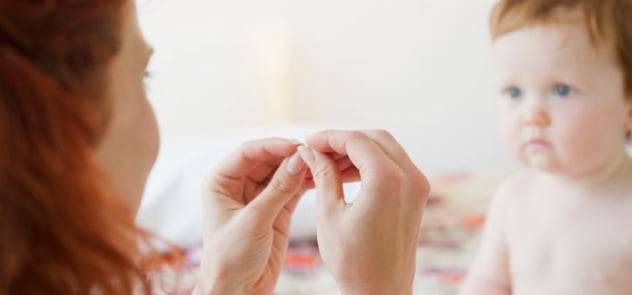
When your baby mimics a sign, they are engaging in a complex multi-sensory process that involves visual processing, memory recall, and motor execution. This repetition helps solidify the semantic depth of words; for instance, when you sign “milk” while saying the word, the baby links the visual cue, the auditory sound, and the physical sensation of satiety.
This dual-encoding process makes the concept of “milk” stickier in the developing brain, which helps in early literacy foundations long before the child can hold a book.
Furthermore, this interaction fosters parent-child bonding by reducing the ‘crying-guessing’ cycle. When a baby can successfully communicate “all done” instead of pushing a bowl of food away in frustration, the entire emotional climate of the home shifts.
This reduction in frustration is vital for the nervous system, as it keeps the infant in a state of calm engagement rather than high-stress agitation. Over time, this builds the emotional intelligence necessary for navigating social interactions later in toddlerhood.
Bridging the Gap: The Theory of Early Expression
The primary mechanism behind the success of baby sign language lies in “Intentionality”—teaching your infant that their gestures have a direct and predictable impact on their environment.
At this developmental stage, babies are essentially “little scientists” testing the laws of their world. When they sign “more” and you provide more food or play, you are rewarding their agency. This feedback loop is essential for fostering a secure attachment style, as the infant feels understood and “seen” by their primary caregivers.
It shifts the parental role from an authority figure who provides care to a partner who collaborates, which is the cornerstone of the Blue Ocean parenting philosophy.

10 Essential Baby Sign Language Tips
Focusing on high-utility signs—those related to basic biological needs and daily routines—is the most effective way to start, as these concepts are most relevant to an infant’s immediate experience.
To ensure your success, select signs that align with your baby’s daily rhythm. We have curated a list of ten essential gestures that cover the vast majority of a pre-verbal infant’s daily requirements. These signs, based on ASL-adapted simplified forms, are designed to be easy for developing hands to mimic while remaining clear enough for parents to interpret instantly.
Below is a structured reference table for your daily practice:
| Sign | Concept | Context |
| Milk | Nutrition | Feeding, breast, or bottle time |
| More | Desire | Asking for more food or repetitive play |
| All Done | Transition | Finishing a meal or a game |
| Sleep | Rest | Bedtime routine or naps |
| Mom/Dad | Connection | Recognizing primary caregivers |
| Please | Socializing | Requesting an object or attention |
| Help | Support | Difficulty with a task or toy |
| Water | Hydration | Sippy cup or bath time |
| Change | Hygiene | Diaper changes |
| Book | Learning | Reading time or storytelling |
Selecting and Modifying Your First Signs
Prioritize signs that empower your child to regulate their own needs, as this builds the most immediate and positive reinforcement cycle for the infant.
When you observe your baby, pay attention to which needs seem to cause them the most distress. If they frequently get upset during transitions, prioritize the “All Done” sign. If they struggle with hunger queues, “Milk” or “More” should be the priority.
Modifying standard ASL signs to fit your baby’s limited motor control is perfectly acceptable and expected. The goal is not linguistic purity; it is the establishment of a functional, two-way channel of communication that works for your specific family unit.
The Role of Physical Modeling and Repetition
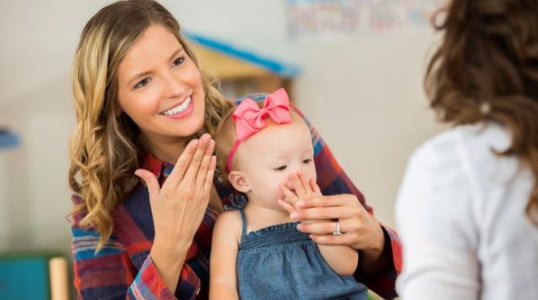
The most effective teaching method is “Active Modeling”—using the signs naturally in conversation rather than treating them as separate, disconnected lessons.
Incorporate signs into your spoken sentences without stopping the flow of interaction. For example, say, “Do you want more milk?” while signing both “more” and “milk.” This embeds the gesture into the contextual clarity of spoken language, helping the child map the gesture directly onto the verbal concept.
Avoid the temptation to quiz your baby; this creates pressure and can stifle the natural desire to communicate. Instead, keep the environment playful and low-stakes.
Mastering the Routine: Implementation
Embedding signs into rituals—the repetitive, predictable parts of your day—is the highest-leverage strategy for rapid adoption and long-term retention.
Create “signing rituals” around high-frequency moments like feeding, changing diapers, or bedtime. These moments are already predictable, which lowers the cognitive load required for your baby to learn something new. For instance, always use the “Sleep” sign just before you dim the lights for a nap.
By linking the sign to a physiological state, you are utilizing associative learning, where the gesture becomes a reliable predictor of a comforting event.
Managing Expectations and Tracking Progress
Understand that there is a wide range of “normal” when it comes to the timeline of early learning and communication; focus on progress relative to your child, not against external benchmarks.
Some babies will mimic signs within a few weeks, while others might take months of receptive learning before producing their first gesture. This discrepancy is often related to individual temperament and the specific stage of motor development.
Avoid comparing your child’s progress to other children in your social circle or online forums. Every child’s brain develops at a unique velocity, and your only goal is to provide a rich, responsive, and supportive environment for their personal growth.
FAQ On Infant Sign Language
Does teaching baby sign language delay verbal speech?
Current research suggests that it does not. In fact, many developmental experts observe that gestural communication may enhance verbal skills by providing a bridge for the brain to categorize concepts before the vocal cords are physically ready to produce speech.
When is the best time to start teaching signs?
Most parents find success starting between 6 to 9 months, a period when infants begin to have the motor control to use their hands and the cognitive ability to associate gestures with specific meanings.
What if my baby makes up their own signs?
Encourage it! If your baby invents a gesture for “dog” or “blanket,” accept it as a legitimate form of communication. Your goal is to foster a communication loop, not to enforce strict dictionary definitions of ASL.
How do I handle it if my partner isn’t on board?
Focus on your own consistency. Even if only one parent consistently uses signs, the baby will still learn the association. Often, once the partner sees the baby successfully communicate a need like “milk” or “more,” they become naturally interested and join in.
Should I use ASL or make up my own?
Using recognized ASL signs is often beneficial because they are standardized and widely available in resources. However, if an ASL sign feels physically difficult for your baby, feel free to simplify it. Consistency with the sign you choose is far more important than the origin of the sign.