Editor’s Note: Teaching colors and shapes to children is most effective when parents replace repetitive flashcards with interactive, sensory-rich play that naturally integrates into their daily environment.
When you begin teaching colors and shapes, stepping away from traditional memorization tools allows toddlers to build a deeper, more organic understanding of the physical world. According to pediatric educators, integrating color recognition and spatial awareness into everyday routines like grocery shopping or nature walks fosters authentic curiosity.
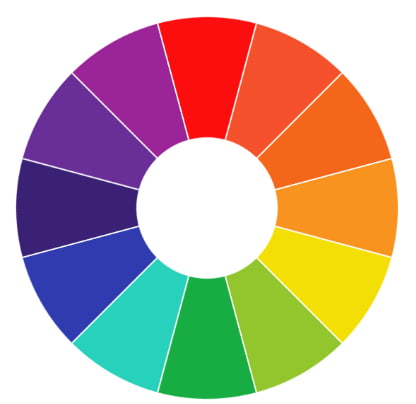
Rather than drilling a child with static images, using tactile experiences actively engages their developing brain. This hands-on, play-based methodology ensures that early childhood education feels less like a strict academic task and much more like a joyful exploration of their immediate surroundings.
Real Life Experience
As a parent, observing your child struggle to name a primary color during a flashcard session can instantly trigger unnecessary anxiety. Many parents worry in this situation, wondering if their toddler is falling behind developmental milestones, but this is entirely normal. I vividly remember trying to force shape matching games, only to realize that my little one learned much faster by simply sorting actual laundry by color.
By shifting our perspective towards a Blue Ocean strategy in parenting, we can eliminate the intense, competitive pressure of early academics. Letting go of rigid teaching tools opens up a beautifully stress-free space where true, self-directed learning naturally occurs.
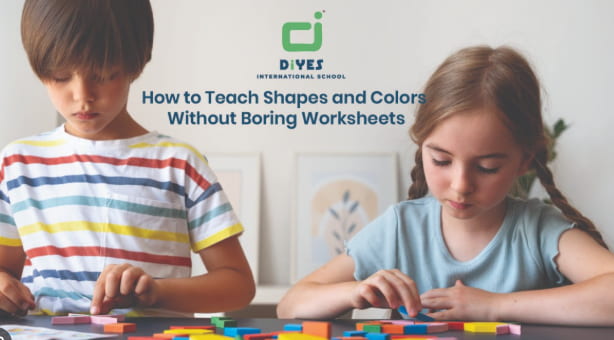
Joy of Teaching Colors to Kids and Shapes
Nurturing a child’s understanding of the world requires us to rethink how we approach foundational learning concepts. The journey of teaching colors to toddlers is widely recognized as a critical milestone in their cognitive architecture, yet the methods we use matter profoundly. While flashcards are a common default for busy parents, they often promote shallow memorization rather than deep, contextual comprehension.
By seamlessly weaving visual discrimination into their natural play environment, toddlers begin to categorize their world with genuine enthusiasm. This fluid approach gently builds their vocabulary development while honoring their innate desire to freely explore.
Cognitive Development: Teaching Colors
Focusing on cognitive development through hands-on activities is considered one of the most robust strategies for early childhood education. When introducing a new color palette, experts suggest that pairing visual stimuli with physical textures creates stronger neural pathways in a toddler’s brain. For example, playing with naturally dyed sensory bins allows children to physically feel the concepts they are learning.
Many parents worry when their child initially confuses red and orange during these activities, but this is a completely normal part of the learning curve. Patience and consistent, low-pressure exposure generally yield the most sustainable educational outcomes.
The underlying “why” behind sensory play is rooted in how young minds process complex visual information. By eliminating the rigid structure of flashcards, we allow the child to lead the discovery process, engaging multiple senses simultaneously. When a child squishes blue playdough while hearing the word “blue,” they are anchoring the vocabulary term to a tangible, physical sensation.
Semantic Memory and Motor Activities
This multi-sensory integration effectively deepens their semantic memory, ensuring that the concept of color becomes deeply ingrained rather than superficially memorized. Such immersive play organically satisfies their developmental need for sensory feedback while seamlessly introducing essential academic concepts.
Educational researchers frequently observe that play-based learning environments significantly lower cortisol levels, creating an optimal state for knowledge retention. According to early childhood specialists, children who learn primary colors and basic geometry through unstructured play tend to demonstrate superior problem-solving skills later in life. Incorporating fine motor activities alongside color identification inherently supports a holistic developmental trajectory.
By trusting the natural learning process, parents provide a deeply enriching environment that fosters both emotional security and intellectual curiosity. This heavily researched methodology confirms that a relaxed, playful atmosphere is the true catalyst for meaningful cognitive growth.
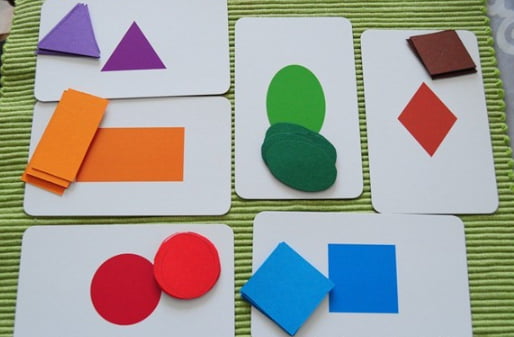
Fine Motor Skills: Color Sorting with Household Items
Integrating color sorting exercises with everyday household items is a highly effective way to simultaneously refine a child’s fine motor skills. Utilizing objects like colorful buttons, safe plastic bottle caps, or varied dry pasta encourages the use of the pincer grasp, which is vital for future writing abilities.
To successfully implement these sorting activities, it is helpful to establish a visually clean and distraction-free workspace for the child. Presenting too many options at once can lead to sensory overload, so experts recommend starting with just two contrasting hues. You can optimize this by following a few simple steps:
- Focus on primary pairs like red and blue first.
- Actively narrate the process using clear color vocabulary.
- Keep sessions entirely child-led to maintain intrinsic motivation.Through these highly focused, engaging micro-interactions, children naturally master their environment while developing essential physical dexterity and coordination.

Spatial Awareness: Introducing Basic Shapes
Developing robust spatial awareness is just as critical as vocabulary building, and the great outdoors provides the perfect canvas for identifying basic shapes. Taking a simple nature walk transforms into a dynamic geometry lesson when you actively encourage your toddler to spot circular pebbles or triangular leaves.
This environmental immersion teaches them that geometric forms are not just abstract drawings on a piece of cardboard, but fundamental structures of the physical world. Many parents worry that their child isn’t learning fast enough without formal curriculum tools, but this is a normal anxiety that nature walks can gently alleviate.
To truly deepen a child’s semantic depth, we must ask open-ended questions about the objects they discover outdoors. Asking “Why do you think this tree trunk feels round?” prompts them to analyze the physical properties of the shape rather than just naming it. This analytical thinking builds a sturdy foundation for future mathematical reasoning and complex problem-solving abilities.
Natural Objects and Teaching Colors Table
By physically interacting with three-dimensional objects, toddlers intuitively grasp concepts like volume, edges, and vertices long before they encounter them in a textbook. It is widely observed that this organic context creates highly adaptable and deeply curious young learners.
Structuring these outdoor explorations can be highly beneficial when aligned with clear, developmentally appropriate learning objectives. To provide a clearer perspective on how nature supports early geometry, consider the practical examples outlined below:
| Natural Object | Associated Geometric Shape | Developmental Benefit |
| Pinecones & Acorns | Ovals and Cones | Enhances 3D tactile perception |
| Fallen Leaves | Triangles and Stars | Promotes edge tracing and counting |
| Tree Trunks & Stems | Cylinders | Supports grasping and volume understanding |
| Puddles & Pebbles | Circles and Irregular forms | Encourages boundary recognition |
Utilizing this structured approach ensures that parents can confidently guide their children through a rich, naturally occurring educational curriculum without relying on synthetic materials.
Early Math Concepts: Baking and Shape Recognition
The family kitchen serves as an extraordinary laboratory for introducing early math concepts and practical shape recognition. Baking cookies, for instance, offers a highly interactive platform where toddlers can physically manipulate dough into various geometric forms. When a child uses a cookie cutter to press out a star or a square, they are directly observing the transformation of matter while learning specialized vocabulary.
This sensory-rich environment actively bridges the gap between abstract mathematical theories and delicious, real-world applications. Experts frequently note that culinary activities significantly enhance a child’s ability to follow sequential instructions and understand spatial relationships.
While navigating the kitchen with a toddler, focusing on the conversational aspect of the activity greatly amplifies the educational value. Casually discussing how two triangle-shaped sandwiches can form a larger square introduces the foundational concept of fractions in an easily digestible manner.
It is highly recommended to let the child physically touch the safe ingredients, feeling the circular shape of a whole fruit before it is sliced. By maintaining a relaxed, non-didactic tone, you foster a highly positive emotional connection to learning. These joyful, collaborative experiences lay the groundwork for a lifelong appreciation of practical mathematics.
Empowering Your Child’s Educational Journey
Embracing a philosophy of organic learning means intentionally moving away from high-pressure academic conditioning and trusting the child’s natural developmental pacing. When it comes to teaching colors and integrating early geometry, the home environment is already overflowing with perfectly designed educational opportunities.
Shifting your focus from rigid memorization to playful, context-rich experiences dramatically lowers the stress levels for both the parent and the toddler. It is consistently observed by pediatric psychologists that children thrive in environments where learning feels like an exciting game rather than a daily chore. This paradigm shift fundamentally transforms the entire parenting experience.
Taking immediate action to redesign your daily routines does not require a massive financial investment or a degree in early education. By simply slowing down and actively narrating the visual details of your daily life, you provide a continuous stream of valuable vocabulary input.
Childhood Curiosity and Sensory Vocabulary
Acknowledging the blue sky, the red apples in the grocery cart, or the rectangular windows in your neighborhood organically builds a massive mental library for your child. Consistent, gentle repetition within meaningful contexts is proven to be far more effective than isolated drilling sessions. This approach cultivates a deeply observant and highly engaged mindset.
Ultimately, fostering childhood curiosity should be the primary goal of any early educational endeavor we undertake within our homes. As you step away from traditional, restrictive methods, you will quickly notice a remarkable increase in your child’s spontaneous observations and joyful discoveries.
Equipping them with a rich sensory vocabulary empowers them to articulate their inner world with beautiful clarity and confidence. The most impactful lessons are those learned through shared laughter, gentle guidance, and the unwavering security of a parent’s presence. Trust in the magic of everyday moments, for they are the true classrooms of early childhood.
FAQ: About Teaching Colors to Kids
What is the best age to start teaching colors to toddlers without using flashcards?
Experts generally observe that toddlers begin to notice visual differences around 18 months, making it a wonderful time to introduce color vocabulary through natural play.
Rather than forcing direct identification, parents should simply start narrating the hues of everyday objects, like pointing out a yellow banana or a blue shirt.
How can I tell if my child is confusing colors or might be colorblind?
It is entirely typical for young children to randomly guess or swap primary names as their cognitive development is still actively progressing.
However, if you consistently observe that a child older than four struggles specifically with red and green differentiation, it might be worth mentioning to a pediatrician.
Are educational cartoons effective for teaching basic shapes and visual discrimination?
While high-quality, slow-paced educational programming can provide supplementary exposure, it should never replace three-dimensional, tactile learning experiences.
Passive screen time lacks the crucial physical feedback necessary for deep neurological connections to form in a developing brain.