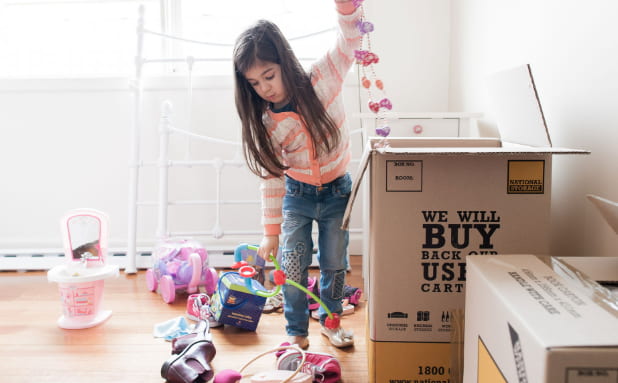
Editor’s Choice: A “no-toys” playroom is not an empty room, but rather a highly curated space devoid of flashy plastics, designed to profoundly boost your child’s independent play and focus. If you feel overwhelmed by the sheer volume of blinking items scattered across your living room, you are not alone.
Modern positive parenting often equates abundance with happiness, leading to spaces so visually cluttered that children bounce from one distraction to another. This sensory overload actively prevents the development of sustained concentration.
By intentionally stripping away conventional, battery-operated items and embracing a minimalist aesthetic, you offer your child the ultimate gift: a blank canvas for their imagination. The transition toward a minimalist play space naturally aligns with proven educational philosophies, fostering an environment where deep, meaningful engagement thrives.
In this guide, we will explore exactly why less truly is more, and how you can gently transform your current chaotic toy room into a serene sanctuary of creative learning.
The Psychology Behind the “No-Toys” Playroom
The fundamental psychology behind a “no-toys” playroom lies in reducing sensory overload, which pediatric experts confirm directly diminishes a toddler’s ability to sustain deep concentration. According to researchers at the University of Toledo, children playing in environments with fewer toys exhibit significantly higher quality of play, engaging with materials longer and in more creative ways.
When a child is presented with forty different options, their developing brain experiences decision fatigue. This overstimulation triggers a stress response, resulting in the scenario where a child dumps out every bin but claims they have nothing to do.
Understanding the “Why?” behind this behavioral shift requires looking at how a child’s cognitive development processes environmental cues. Traditional toys that light up and talk do the playing for the child, casting them in a passive role of mere observation. In stark contrast, a curated environment forces the child to become the active creator of their entertainment.
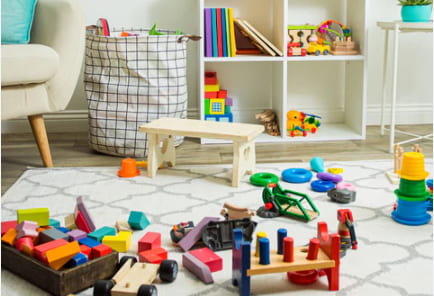
When the room is peaceful, the child’s internal dialogue and imagination naturally become the loudest, most engaging elements in the space. This shift is essential for nurturing executive functioning skills, which govern complex problem-solving.
Toy Minimalism and Physical Space
Furthermore, adopting this toy minimalism approach drastically reduces the friction between siblings and peers during shared playtime. When there are fewer highly stimulating objects to fight over, children are organically pushed toward collaborative, imaginative scenarios. They begin to use the physical space itself—building forts or creating obstacle courses—rather than arguing over a singular, fixed-function toy.
This psychological transition not only creates a calmer household but also instills early lessons in resourcefulness, patience, and the intrinsic value of sharing experiences rather than physical possessions.
How Clutter Kills Independent Play
Visual and physical playroom clutter creates a chaotic cognitive environment that directly sabotages a child’s natural inclination for independent play and self-directed exploration. Think about how you feel trying to work at a desk covered in disorganized paperwork; your child feels that exact same overwhelming mental block in a messy room.
A highly disorganized space signals to their brain that the environment is unmanageable, causing them to constantly seek adult intervention or abandon activities. They lose the ability to enter a “flow state” because their visual field is constantly interrupted by unrelated stimuli.
To counteract this, experts strongly advocate for the toy rotation system, where only a very small, manageable selection of items is accessible at any given time. By hiding the majority of their possessions in opaque bins out of sight, the remaining items suddenly become novel, inviting, and highly valuable.
When a child walks into a room with only three distinct, beautifully displayed activity stations, their path to engagement is clear. This visual clarity empowers them to confidently initiate play entirely on their own, fostering profound self-reliance and boosting their innate creative confidence.
Building an Environment for Deep Engagement
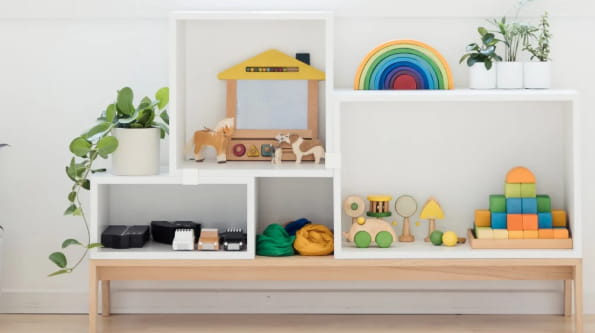
Structuring a successful “no-toys” playroom requires replacing commercial toys with open-ended materials, gross motor equipment, and real-world tools that invite endless imaginative play. The goal is to provide resources that serve ten different purposes rather than just one. For instance, a beautifully crafted set of wooden blocks can be a castle today, a garage tomorrow and a mathematical counting tool the next day.
By prioritizing items that require the child’s physical and mental input to function, you are actively wiring their brain for complex problem-solving and sustained engagement.
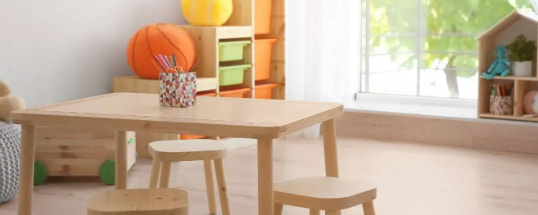
To effectively execute this transformation, you must systematically audit your current inventory and aggressively declutter the space. When setting up the new space, everything should be displayed at the child’s eye level, utilizing low, open shelving rather than deep toy boxes where items get lost and broken.
Sensory Play and No-Toys Environment
Consider incorporating these essential elements to maximize sensory play and gross motor development within the newly cleared space:
- Sturdy indoor climbing triangles or balance boards for physical energy release.
- Blankets, play silks, and large cushions for dynamic fort building.
- A dedicated art station with accessible paper and high-quality crayons.
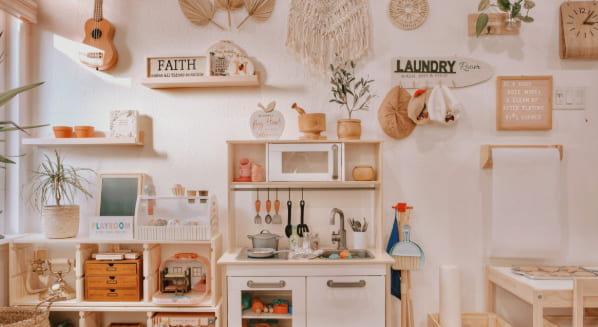
Integrating elements of nature is another crucial component of cultivating this highly engaging, minimalist atmosphere. Real plants, natural sunlight, and wooden textures significantly lower cortisol levels and promote a profound sense of calm.
By treating the playroom not as a dumping ground for plastic, but as a respected learning environment, you elevate the child’s respect for the space.
They naturally begin to treat their materials with greater care, meticulously returning items to their designated spots on the open shelves, which organically reinforces responsibility and spatial order.
Transitioning to Open-Ended Materials
The “How?” of transitioning involves a gradual substitution of single-purpose, battery-operated plastics with durable, open-ended toys and practical life items. Removing all their favorite loud toys overnight might cause unnecessary distress, so the transition should be a phased, strategic fade-out. Start by removing the broken items and the toys they have clearly outgrown.
Then, introduce high-quality “loose parts” like smooth stones, wooden rings, or large beads that can be used in a multitude of ways. You are shifting their environment from a place of consumption to a workshop of creation.
No-Toys Playroom Tips Structured Table
To clearly illustrate the immense value of this shift, we must compare the developmental impact of these two completely different categories of playthings. A child’s brain thrives on action, and the materials they interact with dictate whether they are the director or merely the audience.
The structured table below highlights the stark contrast between conventional items and the preferred tools of a truly focused, minimalist play space:
| Material Category | Examples | Child’s Role | Developmental Impact |
| Closed-Ended (Conventional) | Battery-powered tablet, talking doll, remote-control car. | Passive observer; pushing buttons to elicit a response. | High immediate dopamine, rapid boredom, limited imaginative play. |
| Open-Ended (“No-Toys” Room) | Wooden blocks, play silks, magnetic tiles, natural clay. | Active creator; inventing the narrative and the rules. | Deep focus, enhanced spatial awareness, unlimited creative potential. |
Frequently Asked Questions (FAQ): Toy Minimalism
Will my child be bored and constantly demand screen time without traditional toys?
The direct answer is that a brief period of boredom is actually the essential gateway to profound creative learning. Initially, if a child is accustomed to high-stimulation environments, they may experience a sort of “withdrawal” and complain of having nothing to do.
You must lovingly hold the boundary during this phase. Within a few days, their innate curiosity will reactivate, and they will begin inventing games using the simplest of household items or open-ended materials.
How do I handle well-meaning relatives who constantly gift loud, plastic toys for birthdays and holidays?
Managing this requires proactive, gentle, and firm communication long before the celebrations begin. You can graciously suggest alternative gifts that align with your family’s new minimalist lifestyle, such as zoo memberships, museum passes, or contributions to a college fund.
If physical items do enter the home, you are under no obligation to keep them in the main play area forever. Utilize a strict toy rotation system, or quietly donate items that do not serve your child’s developmental focus.
Is it too late to implement a minimalist approach if my child is already three or four years old?
It is absolutely never too late to optimize your child’s environment to support better cognitive development. Older toddlers actually adapt incredibly well to organized, clutter-free spaces because they inherently crave order and predictability.
You can even involve a four-year-old in the decluttering process by asking them to select the items they are ready to pass on to younger babies. This collaborative approach empowers them and builds a healthy relationship with physical possessions.
Cultivating a Lifetime of Mindful Curiosity
Transforming your home into a “no-toys” playroom is not a rigid punishment of deprivation, but rather a profoundly loving strategy to protect your child’s right to peaceful, uninterrupted imaginative play. As we champion this minimalist approach here at SweetParent, we recognize that stepping away from consumerist parenting norms takes immense courage and dedication.
You are actively choosing to value the quality of their cognitive engagement over the fleeting thrill of unboxing the latest trend. By clearing the physical clutter, you are quite literally clearing the path for their rapidly growing minds to expand, explore, and innovate.
As you embark on this rewarding journey of creating a serene, intentional environment, remember to offer yourself immense grace during the transitional messy middle. Watch closely as your child rediscovers their own inherent creativity, building intricate worlds out of simple wooden blocks and a few play silks.