Contents
- 1 The Neuroscience of the Boogie
- 2 Why Music and Rhythm are the First Teacher
- 3 Age-by-Age Guide: Babies (0-12 Months)
- 4 Age-by-Age Guide: Toddlers (1-3 Years)
- 5 Age-by-Age Guide: Preschoolers (3-5 Years)
- 6 The Social and Emotional Harmony with Music
- 7 Developmental Blueprint: Synchronized Play
- 8 Brain-Boosting Play Frequently Asked Questions! FAQ
Editor’s Choice: Music and movement act as a complete neurological training system for a child’s brain, simultaneously engaging multiple key areas for unparalleled cognitive and sensory development. This whole-brain activation is uniquely effective during the sensitive periods of early childhood development, laying a critical foundation for complex processing and future learning. It’s not just about simple fun. It’s a profound exercise for neuroplasticity.
When a child listens to a rhythm and attempts to move in time, their auditory cortex and motor cortex communicate intensely. This constant dialogue, combined with input from the vestibular system (balance) and proprioception (body awareness), forces the developing brain to build more integrated and efficient neural pathways, strengthening overall executive function far beyond what each element could achieve alone.
This harmonious blend of auditory processing and physical coordination lays the groundwork for everything from language acquisition and mathematical thinking to emotional regulation and motor skills.
The Neuroscience of the Boogie
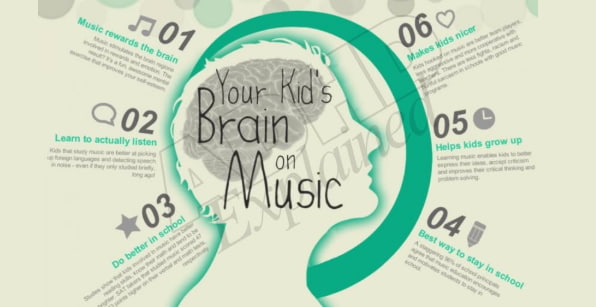
When we talk about “brain power” we are often referring to how well different parts of the brain communicate with each other. Music is one of the few activities that stimulates the entire brain simultaneously. The auditory cortex processes the sound, the limbic system processes the emotions attached to the melody, and the prefrontal cortex anticipates the next beat.
When you add movement to the mix, the motor cortex and the cerebellum jump into action. This creates a “total brain workout” that strengthens the corpus callosum—the bridge between the left and right hemispheres of the brain.
This cross-lateral stimulation is vital because a well-connected brain is a faster, more efficient brain. Research has shown that children who participate in active music-making show improved neuroplasticity, which is the brain’s ability to adapt and change. The combination of Music and Movement for Brain development acts like a supercharger for these neural pathways.
It helps the brain process information faster and improves memory retention, essentially priming the mind for future complex learning tasks like reading and problem-solving.
Why Music and Rhythm are the First Teacher
Long before a baby understands words, they understand rhythm. They have spent months in the womb listening to the steady, rhythmic thump of their mother’s heartbeat. This internal metronome makes rhythm the first “language” a child learns. Recognizing patterns in music—like the verse-chorus structure or a repeating drum beat—is essentially early math. It teaches the brain to categorize information, predict what comes next, and understand sequences.
This rhythmic awareness is directly linked to language and speech development. Spoken language has its own musicality; it has cadence, pitch, and rhythm. Children who can keep a steady beat are often better at detecting the subtle differences in speech sounds, which is a precursor to phonological awareness and reading. By clapping out syllables or marching to the beat of a song, you are helping your child break down the flow of language into digestible chunks.
Additionally, rhythm provides a sense of security and order. In a chaotic world, the predictability of a song offers comfort. This is why lullabies work so well; the slow, repetitive rhythm signals to the nervous system that it is time to downshift and relax. Conversely, a fast, upbeat rhythm signals alertness and energy. Learning to synchronize their body movements to an external beat helps children develop impulse control, a key component of executive function.
Age-by-Age Guide: Babies (0-12 Months)
You don’t need to wait until your child can walk to start this developmental journey. For infants, the parent is the primary partner in movement. Your baby relies on you to provide the rhythm and the motion. The goal at this stage is exposure and bonding. Gentle bouncing, rocking, and swaying stimulate the inner ear, which is the command center for balance.
Even simple activities like patting your baby’s back in time with a song or moving their bicycle legs to a beat provide crucial sensory input. These interactions release oxytocin, the love hormone, strengthening your attachment while simultaneously building the baby’s auditory map.
Tummy Time Tunes
Tummy time can be a struggle for many babies, but music can be the perfect distraction. Place a baby-safe instrument, like a shaker or a musical toy, just out of reach. Play a song and tap the rhythm on the floor in front of them.
This encourages your baby to lift their head and shift their weight to see the source of the sound, strengthening their neck, shoulder, and back muscles. The auditory motivation makes the physical effort of tummy time much more bearable and engaging.
The Lap Bounce and Tickle
Classic nursery rhymes like “The Noble Duke of York” or “Trot, Trot to Boston” are classics for a reason. Bouncing your baby on your lap to the rhythm teaches them to anticipate the “drop” or the “tickle” at the end.
This anticipation is a massive cognitive and early learning leap. It teaches cause and effect and helps develop working memory. When they giggle waiting for the drop, their brain is actively predicting the pattern of the music and the movement.
Age-by-Age Guide: Toddlers (1-3 Years)
Welcome to the age of motion! Toddlers are naturally wiggly, and music gives that energy a purpose. At this stage, children are learning to coordinate their upper and lower bodies. They are also beginning to understand instructions, making action songs a fantastic tool for listening skills.
Toddlers love repetition, so don’t be afraid to play the same playlist over and over. This repetition builds confidence because they know the moves and the words. It is also the stage where they begin to experiment with tempo (fast vs. slow) and volume (loud vs. soft), concepts that apply to both music and emotional regulation.
Stop-and-Go Games
The “Freeze Dance” is the ultimate toddler game. Play music and encourage them to dance wildly, then pause the music unexpectedly and yell “Freeze!” This simple game is actually a complex exercise in self-regulation.
To stop their bodies instantly, a toddler has to inhibit their impulse to keep moving. This builds the inhibitory control needed for listening to safety instructions (like “Stop!” at a street corner) and managing impulses in social situations.
Action Songs and Mimicry
Songs like “Head, Shoulders, Knees, and Toes” or “The Wheels on the Bus” are staples of toddlerhood. These songs require the child to listen to the lyrics, process the instruction, and map it to a specific body part or movement.
This improves cross-lateral movement (crossing the midline of the body), which is essential for communication between the brain’s hemispheres. It also boosts vocabulary as they physically identify body parts and actions while singing.
Age-by-Age Guide: Preschoolers (3-5 Years)
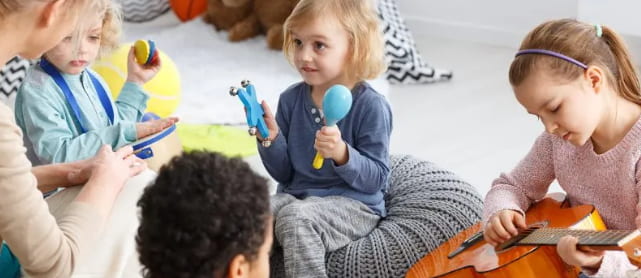
By the preschool years, children are ready for more complex patterns and social music-making. They can handle multi-step movements and are beginning to understand the concept of performing together. This is a great time to introduce simple instruments like rhythm sticks, tambourines, or even homemade drums.
Preschoolers can also use music to explore emotions. They can identify “sad” music versus “happy” music and move their bodies to match the mood. This abstract thinking is a sign of high-level cognitive development and helps them process their own big feelings through art.
Rhythm Sticks and Clapping Patterns
Give your preschooler two wooden spoons or rhythm sticks. Try to tap out the syllables of their name, or echo a pattern: you tap “bum-bum-bum,” and they repeat it back to you.
This “call and response” activity sharpens auditory discrimination and focus. It is the musical equivalent of a conversation, teaching them to listen, wait for their turn, and respond appropriately.
Expressive Free Dance
Put on a piece of classical music, like “The Flight of the Bumblebee” or a slow waltz, and give them colorful scarves or ribbons. Ask them to move how the music makes them feel.
This encourages creative thinking and emotional expression without the need for words. It validates their interpretation of the art and allows them to practice fluid, gross motor movements that build core strength and coordination.
The Social and Emotional Harmony with Music
Beyond the brain and body, music brings people together. When children sing or dance in a group, they are part of a collective entity. They have to adjust their volume to blend with others and synchronize their movements to the group’s rhythm. This fosters a deep sense of belonging and community.
Research suggests that joint music-making promotes pro-social behavior. Children who make music together are more likely to help each other and cooperate in other areas. It builds empathy as they tune into the emotions of the song and the people around them. In a family setting, a nightly dance party or a morning sing-along creates shared rituals that make a child feel safe, loved, and connected.
Developmental Blueprint: Synchronized Play
| Developmental Domain | Neuroplasticity Target | Key Mechanism (How/Why) | Examples of Playful Engagement |
| Cognitive Function | Prefrontal Cortex (Executive Function) | Rhythm training enhances timing, memory, and sustained attention. Moving to a beat involves predicting, planning, and immediate error correction, reinforcing self-regulation. | **Rhythmic Hand Clapping |
| Language Acquisition | Broca’s Area / Wernicke’s Area | The auditory processing required to decode music is highly overlapping with decoding speech sounds. Singing strengthens phonological awareness and sequential memory. | **Nursery Rhymes |
| Gross Motor Skills | Motor Cortex / Cerebellum | Moving large muscle groups in a coordinated way forces synchronization and balance. Rhythm acts as an external pacing mechanism, improving gait, timing, and overall fluid coordination. | **Impromptu Dance parties |
| Emotional Regulation | Limbic System (Amygdala/Hippocampus) | Music is a primary trigger for emotions and memories. The synchronized experience of movement with music releases powerful feel-good neurotransmitters like dopamine and endorphins, promoting bonding and stress reduction. | **Soothing Lullabies |
Brain-Boosting Play Frequently Asked Questions! FAQ
Why is a simple clapping game actually good for my child’s brain?
Simple clapping games are powerful neurological exercises because they force precise synchronization between the brain’s auditory and motor systems, which are key to executive function development. This strengthens the neural connections required for memory, planning, and sustained attention. Clapping to a rhythm involves predicting the beat, executing a precise movement, and self-correcting—all critical precursors to mature self-regulation and problem-solving skills.
How can music help a child who is struggling to express their emotions?
Music can help a child express emotions because it is a direct channel to the brain’s emotional center, allowing them to non-verbally connect with and process complex feelings. Listening to varied melodies and playing with different dynamics offers a safe, accessible medium for a child to mirror and explore an inner emotional landscape they cannot yet articulate with words. This shared experience fosters empathy and provides a critical tool for emotional regulation.
Does my child need specialized classes, or can we do this at home?
Your child does not need specialized classes; you can effectively fuel their brain development at home by simply integrating music and movement into their daily play routines. Developmental psychologists agree that the key is consistent, interactive, joyful engagement, not expensive, pre-packaged programs. Simply singing while you prepare a snack, having impromptu living room dance parties, or exploring varied instruments is all your child’s developing nervous system needs to thrive.