Contents
Editor’s Choice: Implementing Montessori at Home by creating a fully independent, highly accessible, and beautifully simplified play space is the single most effective method to foster your child’s self-reliance and internal discipline. Unlike overwhelming environments heavily cluttered with hundreds of flashing plastic toys, this modern educational framework strictly relies on the fundamental “less is more” principle. The core philosophy deeply centers on allowing children to safely explore the physical world on their own terms, completely free from constant, unnecessary adult intervention.
By intentionally making minor physical adjustments to your home environment, you can significantly enhance their developing motor skills, deep emotional satisfaction, and critical independent decision-making capabilities.
Many anxious parents mistakenly believe that successfully adopting this specific philosophy requires massive financial budgets or highly complex, exhausting home renovations, but the primary practical goal is simply removing environmental friction. The American Academy of Pediatrics scientifically confirms that child-directed free play time drastically accelerates profound cognitive development and lifelong emotional resilience.

Optimizing the Physical Environment for Your Child’s Scale
The most critical step in allowing your child to genuinely declare their independence indoors is meticulously scaling down all daily furniture and beautifully crafted Montessori materials to perfectly match their exact physical eye level. Living in a giant, oversized world designed exclusively for adult convenience naturally forces energetic toddlers into a frustrating state of constant dependency, which can severely damage their rapidly developing self-esteem.
When you physically lower everything to their easily accessible reach, you will watch them miraculously transform from a frustrated child who constantly demands help into a highly proactive, joyful, and incredibly capable young individual.
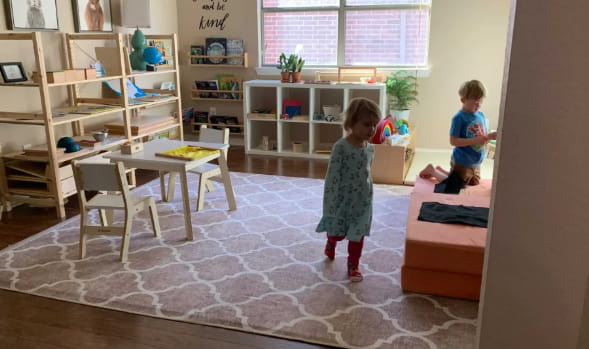
You can powerfully initiate this adaptation process today by introducing low-hanging wooden racks for their daily clothing, comfortable floor cushions for independent seating, and a perfectly sized wooden activity table set. Expert pediatricians heavily emphasize that a physically accessible environment provides growing children with a profound, calming neurological sense of security and absolute belonging.
Utilizing floor-level shelves instead of unreachable high storage directly triggers their innate biological instinct to organically explore the world on their own initiative, providing an incredible, measurable contribution to their independent gross motor skills and overall complex physical coordination.
Floor Bed and Nursery Room
Transitioning from a traditional, restrictive crib with high bars to a remarkably low-profile floor bed is widely considered one of the absolute peaks of gaining early childhood autonomy. It is a wonderfully empowering freedom for a young child to safely go to their bed independently when they are genuinely tired or safely get up in the morning without desperately waiting to be rescued.
Independent behavioral research reveals that children freed from artificial physical restrictions experience significantly lower daily stress levels and noticeably longer, uninterrupted attention spans. Showing this profound physical respect to the child is the golden rule of successful nursery room design.
The Power of a Clutter-Free, Minimalist Layout
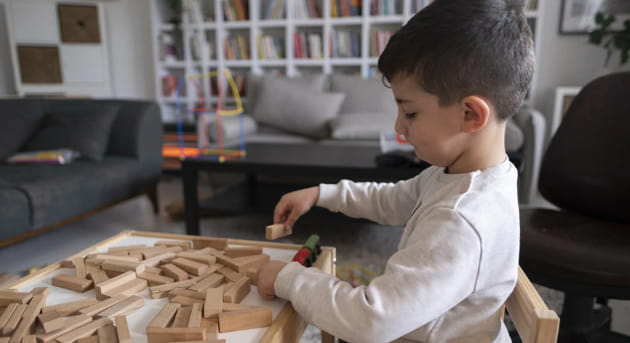
A fundamental characteristic of the successful Montessori at Home system is intentionally providing a remarkably calm learning environment centered heavily on modern minimalist design principles, entirely avoiding the exhausting chaos of overstimulating, noisy toy piles. Having dozens of drastically different objects scattered chaotically across every corner of the room literally shatters a young child’s fragile attention span, frequently leading to severe, chronic focus difficulties.
A drastically simplified, breathing area allows the child to engage deeply and meaningfully with a single material, exploring all its unique properties while naturally developing an incredibly strong, sustained concentration span.
When you ruthlessly and confidently remove unnecessary, distracting items from the room, you will immediately notice that your child values the remaining quality materials much more and consistently creates highly imaginative games with them.
Implementing Open Shelving and the Toy Rotation System
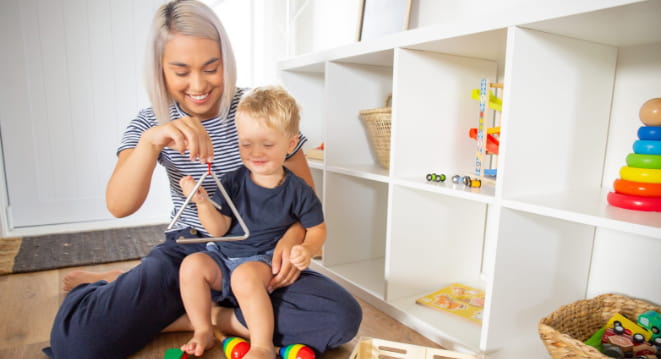
To guarantee your child can easily access their educational materials and to proactively protect them from overwhelming decision fatigue, you must diligently implement an open shelving system where everything is visible, coupled with a strict rotation schedule. Traditional, deep toy boxes unfortunately act as dark, disorganized graveyards for forgotten items that inevitably sink to the absolute bottom.
On beautifully organized open shelves, every single activity has its own dedicated, perfectly sized wooden tray, powerfully instilling the child with the profound responsibility of choosing their work and carefully returning it to its exact place once finished.
This specific organizational challenge is exactly where the strategic toy rotation technique comes into brilliant play; displaying only a carefully limited number of materials while intentionally hiding the rest keeps the child’s daily interest consistently vibrant and completely alive.
According to leading cognitive development experts, children deliberately presented with fewer, high-quality choices engage with their materials for much longer, uninterrupted periods, frequently inventing highly complex play scenarios.
Early Childhood and Cognitive Flexibility
When consciously selecting specific materials to proudly display on the accessible shelf, you must carefully observe your child’s current, evolving developmental needs and arrange them highly strategically. Organizing the wooden shelf precisely from left to right and from simple to complex is a remarkably powerful early childhood education structure that flawlessly prepares the essential mental foundation for future, lifelong reading and writing habits.
When your child inevitably loses interest in a specific material, quietly removing it and efficiently replacing it with a fresh activity tray that directly targets their current skill level will continuously nourish their deep curiosity and cognitive flexibility.
The Sensory Importance of Wooden and Natural Materials
Moving completely away from the cheap, synthetic texture of commercial plastics and heavily utilizing natural wooden toys, along with authentic real-world materials like heavy glass, cold metal, and soft fabric, allows the child to experience diverse weights and textures, fostering a powerful sensory integration process.
A hollow plastic apple neither smells nor physically weighs the exact same as a heavy, real apple, whereas authentic, natural materials honestly teach the curious child the unyielding laws of physics. These highly realistic sensory experiences actively stimulate vital synaptic connections in the growing brain much faster and far more permanently, offering a massive scientific contribution to cognitive development.
Utilizing carefully selected, breakable real materials serves as the absolute most natural self-regulation mechanism available, strongly and organically encouraging the energetic child to deeply control their physical movements and act with deliberate care and grace.
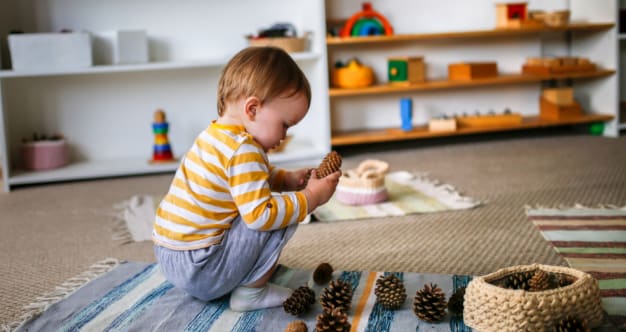
Traditional Playrooms vs. Montessori Spaces
The absolute fundamental difference between a highly chaotic classic children’s room and a beautifully structured Montessori play area is that the former functions as a loud amusement park requiring constant adult approval, while the latter operates as a calm life workshop for independently testing personal skills. Traditional rooms are typically designed heavily based on adult aesthetic preferences, featuring massive fantastical characters and overwhelmingly high sensory stimulation.
The alternative, highly effective educational model, however, places absolute, unwavering focus on profound simplicity, functional reality, and ultimate physical independence. Understanding these core philosophical differences provides modern parents with a incredibly powerful strategy for meaningful home modifications.
The vastly varying behavioral reactions children display to these specific physical arrangements strikingly and undeniably reveal the direct, long-term consequences of these two entirely opposing approaches. The chaotic traditional system frequently causes a relentless, exhausting need for constant external motivation, a severe lack of respect for personal belongings due to overwhelming clutter, and intense hyperactivity stemming from chronically high stimulation.

Parental Burnout and Montessori
In stark, beautiful contrast, within a properly structured, deeply respectful environment, a calm child will independently take their designated tray and quietly work in a cozy corner for extended periods. This distinct behavioral shift organically and efficiently relieves the relentless parental burnout associated with constant entertainment.
The meticulously structured comparative table provided below has been specifically and carefully prepared for you to clearly grasp the fundamental core dynamics of these two contrasting approaches and their direct, measurable impacts on a child’s delicate developmental psychology.
These highly precise, actionable comparison metrics will undoubtedly serve as your most reliable, objective, and deeply functional guide as you consciously and bravely transform your home’s interior design to infinitely better support your precious child’s incredible journey toward true, lasting independence.
| Key Feature | Traditional Playroom Environment | Structured Montessori at Home Area |
| Material Presentation | Deep, messy baskets and closed boxes | Open shelves and clearly defined activity trays |
| Physical Accessibility | Adult-height, frequently locked cabinets | Perfectly scaled, floor-level arrangement |
| Sensory Stimulation | Very High (Flashing lights, loud synthetic noises) | Deliberately Low (Natural, focus-enhancing elements) |
| Core Learning Model | Highly passive and entirely adult-directed | Deeply active exploration, true self-sufficiency |
Frequently Asked Questions (FAQ) about Montessori
In this highly specific section, we directly and honestly address the deeply valid concerns and highly searched long-tail questions that frequently arise in the anxious minds of loving parents beginning to implement the Montessori at Home approach, utilizing evidence-based perspectives from leading expert pedagogues. Loving families often unnecessarily stress themselves out by mistakenly assuming this educational system has rigidly strict, entirely unforgiving institutional rules.
However, the absolute true objective is not to flawlessly replicate a rigid classroom environment, but rather to flexibly and warmly integrate universal principles that deeply respect your child’s vast potential into your own unique home. Our detailed answers aim to bring ultimate comfort to your parenting journey.
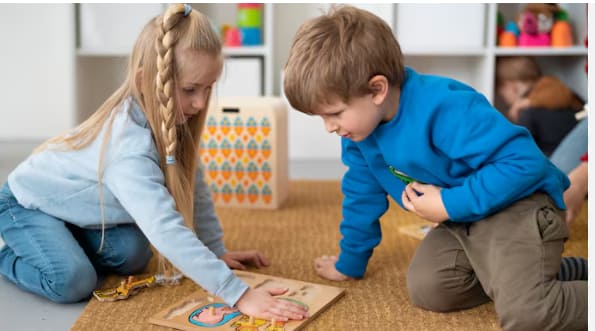
What if my child completely refuses to clean up their beautifully arranged trays?
Gently guide them by modeling the exact behavior yourself; say, “Let’s put the heavy wooden blocks to sleep together,” transforming the dreaded chore into a deeply connecting, positive daily routine.
Are expensive, officially branded wooden materials absolutely required for success?
Absolutely not; everyday, safe household items like stainless steel measuring cups or simple wooden spoons perfectly support vital sensory development without costing a single extra penny.
How can I safely manage open shelving if I have a highly curious crawling baby and a toddler?
You must strategically place the toddler’s small, complex parts on slightly higher, securely anchored shelves, keeping the absolute bottom row exclusively reserved for safe, large baby-friendly exploration objects.
Fostering Confident Individuals Through Freedom of Choice
Every single beautiful child whose physical and emotional boundaries are deeply respected and lovingly supported by dedicated Montessori at Home principles will inevitably and joyfully grow into a wonderful adult with exceptional problem-solving skills, remarkably high intrinsic motivation, and a profound, unshakeable sense of personal responsibility.
Respectfully and meticulously arranging a small corner of your home entirely according to their specific physical characteristics is not just a simple, trendy decoration project, but the absolute most concrete, visible manifestation of the profound, eternal trust you place in their capabilities.
How about bravely taking that very first, incredibly small step today, without a single moment of hesitation, to drastically reduce the unnecessary, exhausting clutter in your house and drop down to your little one’s exact eye level? Simply packing away a few noisy, entirely unused toys into hidden boxes can truly be the most powerful, highly effective beginning to this miraculous child development adventure.