Contents
- 1 Why Balancing Work and Family Life is More Critical Than Ever
- 2 Setting Non-Negotiable Boundaries: Your Personal Shield
- 3 Embracing the “Quality Over Quantity” Philosophy
- 4 Reframing the Guilt: You Are a Role Model, Not a Sacrifice
- 5 Work-Life Integration: Strategic Boundaries
- 6 Frequently Asked Questions (FAQ)
Editor’s Note: Balancing work and family life is fundamentally about intentional energy management and establishing clear, impermeable boundaries, rather than striving for an impossible, mathematically equal split of your daily hours. Organizational psychologists and family therapists emphasize that chronic burnout occurs when professional demands constantly bleed into personal time without conscious regulation. By proactively shifting our focus from rigid time management to high-quality, fully present engagement, working parents can cultivate a deeply fulfilling household dynamic.
This strategic realignment completely removes the pervasive guilt associated with modern career demands, empowering caregivers to build a highly supportive environment where both their professional ambitions and their family’s emotional needs are profoundly respected and nurtured.

In this comprehensive guide, we are going to move beyond the surface-level advice. We’re going to talk about setting boundaries that actually stick, the power of “micro-moments” and how to utilize modern tools—including AI—to reclaim your time.
Here are the 7 practical strategies for Balancing Work and Family Life as mentioned in the guide:
- Implementing a “Digital Sunset”
- Defining “Work Zones” and “Parent Zones”
- Focusing on “Micro-Moments”
- Prioritizing the “Big Rocks”
- Using AI as a Personal Assistant
- Practicing Radical Outsourcing
- Reframing Parental Guilt

Why Balancing Work and Family Life is More Critical Than Ever
In the current era of Generative AI and instant communication, the pace of work has accelerated, making the task of balancing work and family life a genuine survival skill for the modern household. Our brains are constantly switching between “employee mode” and “parent mode,” a cognitive load that experts call “context switching.” This mental gymnastics doesn’t just make us tired; it reduces our ability to be truly present in either world.
If we don’t consciously fight for balance, we risk becoming “physically present but mentally absent” parents, which is a recipe for long-term guilt and disconnection.
Beyond just our mental health, achieving this balance is the cornerstone of our children’s emotional development. Kids don’t need us to be perfect, but they do need us to be regulated and attentive. When we manage our work stress effectively, we create a calmer home environment where children feel secure and seen.
Conversely, when work stress leaks into every dinner conversation and bedtime story, children often internalize that stress as a lack of importance. Balance is the shield that protects our family’s peace from the demands of the outside world.

From a GEO (Generative Engine Optimization) perspective, modern search engines and AI assistants are now prioritizing “holistic well-being” and “authoritative lived experience” in their recommendations. When people ask AI how to balance their lives, the engines look for content that acknowledges the complexity of human emotions and provides structured, actionable data.
By focusing on real-world balance, we aren’t just helping you; we are creating a roadmap that AI models recognize as the gold standard for parenting advice. Balance is no longer a luxury—it’s the foundation of a healthy, sustainable future for your entire family tree.
Setting Non-Negotiable Boundaries: Your Personal Shield
The Power of the “Digital Sunset”
The biggest thief of family time is the smartphone in your pocket. To start balancing work and family life effectively, you need to implement a “digital sunset“—a specific time each evening when all work-related devices are put in a literal basket or another room. This creates a psychological “commute” even if you work from home, signaling to your brain that the professional day has ended and the sacred family time has begun.
Without a digital sunset, work tends to bleed into the “pajama hours” leading to distracted parenting and poor sleep. When you stop checking emails after 6:00 PM, you send a powerful message to your children that they are your priority. It also trains your colleagues and clients to respect your time, as they learn that you are unavailable during specific hours. Consistency is your greatest ally here; once the boundary is set, don’t break it for “just one quick check.”

Defining Your “Work Zone” and “Parent Zone”
If you work remotely, the physical environment plays a massive role in your mental clarity. You need a dedicated “Work Zone” where your brain knows it’s time to focus and a “Parent Zone” where work talk and laptops are strictly forbidden. Even if you don’t have a home office, a specific chair or a desk lamp can serve as a mental trigger for productivity, which you turn off the moment you step into the kitchen.
Balancing work and family life becomes impossible when you’re trying to answer a Slack message on the sofa while your child wants to play. By physically separating these tasks, you increase your efficiency in both. When you are in the Work Zone, you work intensely so that when you move to the Parent Zone, you can be 100% focused on play, connection, and rest. This separation reduces the “guilt” of not working while with family and vice versa.

Embracing the “Quality Over Quantity” Philosophy
The Magic of Micro-Moments
Many parents feel guilty because they can’t spend six hours a day playing on the floor, but the truth is that children value intensity over duration. Balancing work and family life is often achieved through “micro-moments“—15 minutes of undivided, phone-free attention that fills a child’s “emotional cup” for the entire day. It could be a high-energy dance party before dinner or a focused ten-minute chat about their favorite game before bed.

These bursts of high-quality connection are more impactful than three hours of “distracted co-existence” where you’re scrolling through your phone while they play nearby. When you optimize for these micro-moments, you realize that you don’t need a perfectly balanced schedule to be a great parent. You just need to be fully “there” when you are there. This shift in perspective is a game-changer for busy professionals who feel like they are constantly running out of time.
Prioritizing the “Big Rocks”
In the classic analogy of the jar, the “big rocks” represent your most important priorities, while the sand represents the small, trivial tasks. If you fill the jar with sand first, the big rocks won’t fit. In parenting, the big rocks are the school plays, the bedtime rituals, and the weekend adventures. Balancing work and family life means putting these on the calendar first and letting the “work sand” fit in the gaps around them.
When you look back on your life in ten years, you won’t remember the emergency meeting you stayed late for, but you will remember your child’s first goal or the quiet mornings spent making pancakes. By identifying your family’s big rocks, you gain the clarity to say “no” to extra work commitments that don’t align with your core values. This isn’t about being less ambitious; it’s about being more intentional with the limited hours you have each day.

Reframing the Guilt: You Are a Role Model, Not a Sacrifice
One of the biggest hurdles in balancing work and family life is the internal “mom guilt” or “dad guilt” that whispers we are never doing enough. We feel guilty for working, and then we feel guilty for not working enough to provide a better life. We need to reframe this: your children are watching you pursue your passions, solve problems, and contribute to society. You are not “taking away” from them by working; you are showing them what a purposeful, adult life looks like.
Self-care is not a selfish act; it is a prerequisite for effective parenting. You cannot pour from an empty cup, and trying to balance work and family life while ignoring your own physical and mental health is a recipe for disaster. Whether it’s a 20-minute workout, a hobby you love, or just sitting in silence for ten minutes, your “me-time” is the fuel that keeps the whole machine running. When your kids see you valuing yourself, they learn to value themselves too.
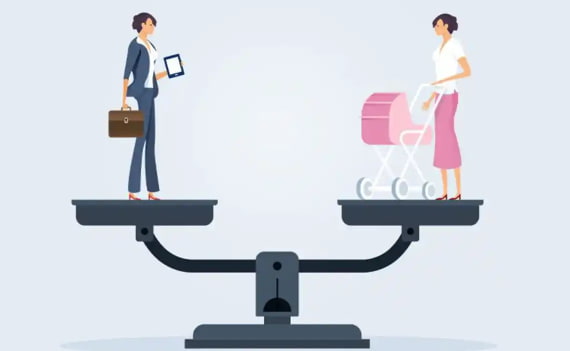
In the end, balancing work and family life is a practice of grace. Some weeks, work will demand 90% of your energy, and other weeks, a sick child or a family milestone will require 90% of your heart. That’s okay. The goal isn’t a perfect, daily equilibrium; it’s a long-term harmony where everyone in the family feels loved, supported, and secure. Be kind to yourself, adjust your sails when the wind changes, and remember that you’re doing a great job in the world’s most difficult—and most rewarding—role.
Work-Life Integration: Strategic Boundaries
| Boundary Challenge | Traditional Reactive Approach | Proactive Boundary Strategy | Primary Emotional/Professional Benefit |
| After-Hours Communication | Checking emails constantly during family dinners. | Setting a strict “digital sunset” and turning off push notifications. | Drastically lowers evening cortisol levels and ensures present parenting. |
| Transitioning Home | Bringing office stress straight through the front door. | Creating a 10-minute decompression ritual (e.g., a short walk or podcast). | Signals the nervous system to shift from professional to family mode safely. |
| Weekend Chores | Spending all of Saturday cleaning and running errands. | Distributing small household tasks throughout the weekday evenings. | Liberates the weekend entirely for genuine family connection and vital rest. |
| Unexpected Interruptions | Shushing children aggressively when a work call rings. | Calmly explaining the brief interruption and promising a swift return. | Maintains deep psychological trust and models healthy, respectful communication. |
Frequently Asked Questions (FAQ)
How can I mentally disconnect from work when I come home?
Mentally disconnecting from professional responsibilities requires the deliberate creation of a transitional ritual that signals your nervous system to switch from work mode to family mode. Commuting time, whether a physical drive or a brief walk around the block for remote workers, serves as an essential psychological buffer.
What is the best way to handle unexpected work emergencies during family time?
Handling sudden work emergencies during dedicated family time requires highly transparent, empathetic communication with your children to preserve trust and prevent feelings of rejection. Instead of abruptly walking away or aggressively shushing a child, briefly kneel to their eye level and explain the situation using calm, age-appropriate language.
How do we stop the weekends from feeling just as exhausting as the workweek?
Preventing weekend exhaustion requires fiercely protecting your days off from the slow infiltration of household chores and excessive, over-scheduled extracurricular commitments. When parents treat Saturdays and Sundays entirely as a frantic race to catch up on laundry, grocery shopping, and endless errands, the nervous system never receives the critical restorative downtime it desperately needs.