Editor’s Pick: Experiencing the back crawling phase is a completely normal and highly fascinating developmental milestone that simply highlights your baby’s unique physical progression, rather than a cause for concern. Pediatric physical therapists explain that infants often move backward first because their upper body and arm muscles develop strength much faster than their legs and core. By pushing up with their robust arms, they unintentionally glide in reverse across the floor.
Embracing this quirky “reverse gear” allows parents to celebrate their child’s growing independence and problem-solving skills, knowing that this temporary stage actively builds the essential muscular foundation required for imminent forward mobility and eventual walking.
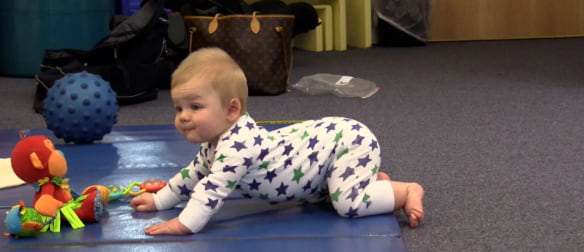
They want to see the world, and if they can’t go forward yet, they’ll figure out a way to go backward! This creative problem-solving is a sign that your baby’s brain is working hard to navigate their environment, even if they’re taking a slightly unconventional route.
In this guide, we’re going to dive deep into the world of back crawling. We’ll explore why babies choose this “scooting” method, how it benefits their physical development, and provide you with 8 practical tips to help them transition to forward movement when they’re ready.
Why Do Babies Back Crawl? Understand the Reverse Drive
The science behind back crawling is actually quite logical when you look at how muscles develop. Generally, a baby’s leg muscles (especially the quads and glutes) become strong enough to “push” before their core and arm muscles are ready to “pull” or support their full weight on all fours. When your baby lies on their back and plants their feet firmly on the floor, they discover that a big push sends them sliding.
It’s a moment of “Eureka!” for them—they’ve found a way to change their scenery, even if it means seeing where they’ve been rather than where they’re going.
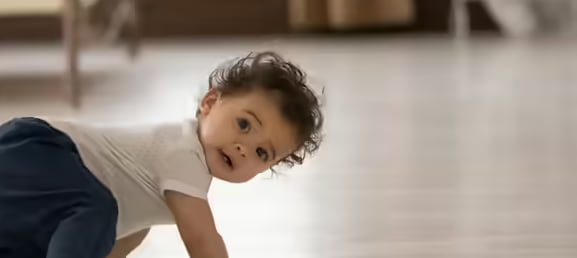
Environmental factors also play a huge role in this scooting behavior. Slippery surfaces like hardwood or laminate floors offer very little resistance, making it much easier for a baby to slide on their back than to grip the floor with their knees. Furthermore, some babies simply prefer the “scenic route.” From their back, they can see the ceiling, hanging toys, and the faces of their favorite people much more easily than they can while looking down at the carpet during tummy time.
It’s a perspective shift that allows them to interact with their surroundings in a way that feels safe and stable.
It’s important to understand that back crawling is a recognized variation of infant mobility. Pediatricians often see this as a sign of healthy “motivation to move.” While the traditional crawl is the ultimate goal for bilateral coordination, back crawling serves as an excellent workout for the lower extremities.
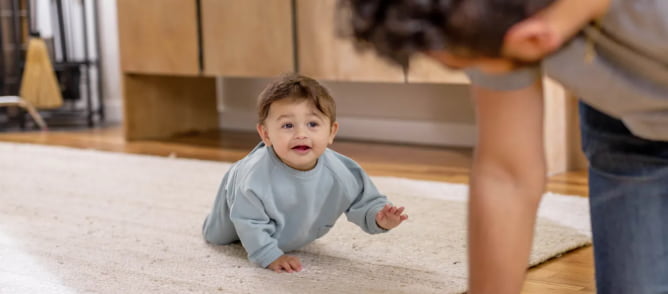
8 Practical Tips to Support Your Back-Crawling Baby
Master the Art of Tummy Time
If your baby is strictly a back-crawler, they might need a little extra encouragement to spend time on their belly. Tummy time is the “gym class” of the baby world, essential for building the neck, shoulder, and back strength required for forward crawling. Try to incorporate short, frequent sessions throughout the day to help them get comfortable with the “all-fours” perspective.
To make tummy time more appealing, get down on the floor with them! Your face is the best toy they have. You can also use “tummy time pillows” or mirrors to keep them engaged. The more they strengthen their upper body, the sooner they will realize they can use their arms to pull themselves forward, eventually balancing out the “push” coming from their legs.
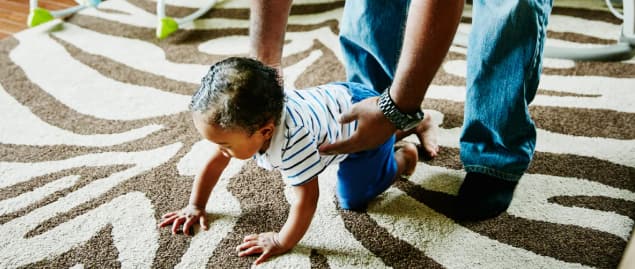
Create a High-Traction Play Zone
Slippery floors are the best friend of the back-crawler but the enemy of the traditional crawler. If your home is mostly hard surfaces, consider investing in a large, textured play mat or a low-pile rug. This extra friction makes it harder for them to slide backward and provides the “grip” their knees need to stay tucked under their body.
Textured surfaces also provide sensory feedback to your baby’s hands and feet. When they feel the grip of the mat, it encourages them to dig in and push off in a more controlled manner. Creating a dedicated “no-slide zone” is one of the easiest environmental tweaks you can make to help your baby explore different ways of moving.
The “Anchor” Technique
When you notice your baby starting to scoot backward, you can gently place your hands behind their feet to act as an anchor. When they push back, they’ll feel your steady palms. This often causes them to pause and rethink their direction. It’s a gentle way to show them that there’s a limit to how far the “reverse drive” will take them.
As they push against your hands, they are actually doing a resistance workout. This strengthens the exact muscles they will later use to push themselves up into a sitting position or a standing one. You can even turn this into a game, encouraging them to push against you while you make funny “beep beep” reverse noises to keep the atmosphere light and fun.
Strategic Toy Placement
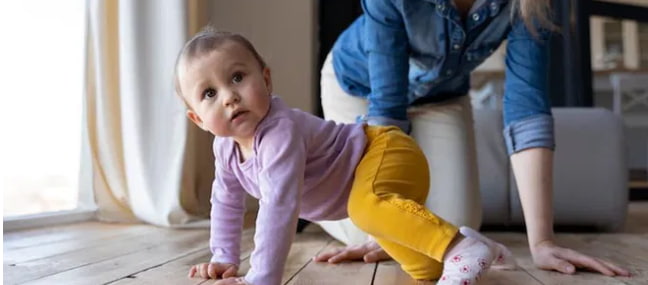
Babies are highly motivated by their favorite things! To encourage forward movement, place a highly desirable toy—something colorful, noisy, or a favorite teether—just out of their reach in front of them while they are on their tummy. This creates a “goal” that requires them to move forward rather than backward.
If they try to go backward to get to it, move the toy slightly further away so they have to refocus. You’re trying to trigger that “reaching” reflex. When they reach forward with one hand while supporting themselves with the other, they are practicing the fundamental cross-body coordination needed for a standard crawl.
Prop Them Up with a Boppy or Rolled Towel
Sometimes babies back-crawl because being flat on their belly feels too difficult. You can help bridge the gap by placing a small rolled-up towel or a nursing pillow under their chest during play. This elevates their upper body, taking some of the weight off their arms and allowing them to look around more easily while in a forward-facing position.
This “elevated” tummy time helps them get used to the sensation of weight-bearing on their hands and knees. It’s like using training wheels for crawling! Once they feel stable in this propped-up position, they are much more likely to try and move their legs forward to meet their hands, eventually discovering the classic crawling stance.
Dress for Success (Knee Grip)
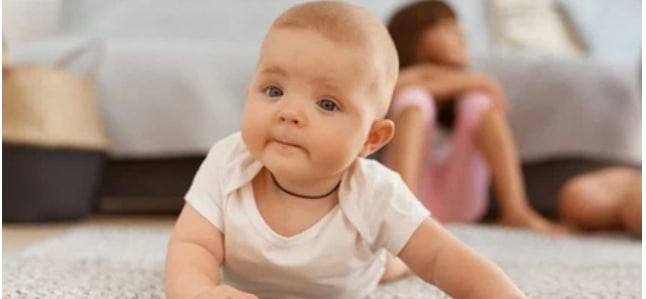
Believe it or not, your baby’s outfit can affect how they move. Long, slippery footie pajamas can make it hard for knees to get traction. Try letting your baby have some “naked knee” time or use leggings that have rubberized grips on the knees. This small change can provide just enough “stick” to prevent them from sliding backward.
Bare feet are also excellent for crawling development. The toes provide a lot of the “push” and “grip” needed to move forward. If your house isn’t too cold, letting your baby explore barefoot helps them feel the floor and use their natural anatomy to navigate. It’s all about giving them the right “tools” for the job!
Play the “Human Tunnel” Game
Babies love a challenge, especially one that involves their favorite adults. You can create a “tunnel” by arching your body or using a play tunnel. Crawl through it yourself and encourage them to follow you. Seeing you move on all fours provides a powerful visual cue for them to imitate.
Imitation is a huge part of early learning for infants. When they see you “doggy crawling,” their brain starts to map out those same movements. Even if they don’t get it right away, the exposure to the movement pattern is invaluable. Plus, crawling around the living room together is a great way to bond and get some light exercise yourself!
Focus on Core-Strengthening Games
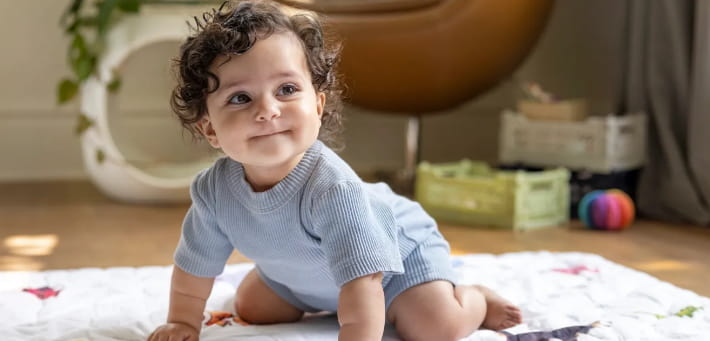
Back crawling relies heavily on the legs, so it’s important to balance that out by strengthening the “core”—the abdominal and back muscles. You can do this by gently rolling your baby from side to side on a soft surface or playing “assisted sit-ups” by holding their hands and gently pulling them toward you.
A strong core is the “bridge” between the upper and lower body. When the core is strong, the baby can coordinate their arms and legs to move in sync. Games like “the airplane” (carefully lifting them while they are on their belly) also help engage those back muscles. A strong baby is a confident baby, and confidence is key to trying new ways of moving.
When to Talk to Your Pediatrician
While back crawling is almost always just a quirky phase, it’s natural for positive parents to wonder when it might be a sign of something else. Generally, as long as your baby is using both sides of their body equally—meaning they aren’t just pushing with one leg or dragging one arm—there is usually nothing to worry about. Back crawling is a variation of normal, much like “commando crawling” or “bottom shuffling.”
However, if your baby is nearing 12 months and isn’t showing any interest in moving toward a “standing” or “cruising” phase, it’s worth a mention at your next check-up. You should also reach out if you notice any persistent stiffness in their legs or if they seem to have very “floppy” muscle tone.
Pediatricians are used to these questions, and a quick physical assessment can provide you with the peace of mind you need.
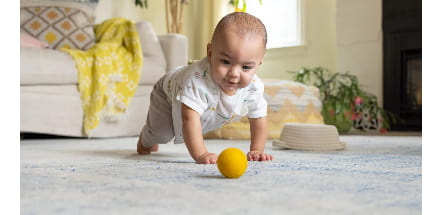
Remember, the goal of development isn’t to follow a strict calendar; it’s to see a steady progression of skills. If your baby went from staying still to back-crawling, that is progress! They have discovered that they can influence their position in the world. Celebrate that win! Your baby is a little scientist, and back crawling is just their first successful experiment in physics.
Movement Mechanics: Understanding the Reverse Gear
| Crawling Phase | Physical Mechanism | Proactive Parental Support | Primary Developmental Benefit |
| The Push-Up | Relies entirely on strong chest and arm muscles. | Providing ample, supervised tummy time on a firm surface. | Builds the critical upper body strength needed to bear weight. |
| The Reverse Glide | Pushing away from the floor, resulting in backward motion. | Placing a soft hand behind their feet as a gentle push-off point. | Teaches cause-and-effect and essential spatial awareness. |
| The Rocking Stage | Getting on hands and knees to rock back and forth. | Cheering them on without rushing their physical timeline. | Calibrates balance and deeply engages the core muscles. |
| Forward Crawling | Coordinating opposite arm and leg movements. | Placing a highly desired toy slightly out of reach in front of them. | Masters cross-lateral coordination connecting both brain hemispheres. |
Frequently Asked Questions (FAQ)
Why does my baby only crawl backward?
Your baby is likely crawling backward simply because their upper body muscles are currently much stronger and more coordinated than their developing leg and core muscles. During the early stages of mobility, an infant naturally relies on their chest and arms to push themselves up off the floor, which inadvertently propels them in a reverse direction.
Is back crawling a sign of a developmental delay?
Back crawling is absolutely not a sign of a developmental delay; rather, it is a highly common, perfectly healthy stepping stone on your child’s unique mobility journey. Pediatricians consistently reassure parents that babies develop at their own distinct pace, and choosing the “reverse gear” is simply a creative adaptation, not a neurological deficit.
How can I gently encourage my baby to move forward?
You can gently encourage forward mobility by strategically placing highly motivating toys just slightly out of their immediate reach, transforming their playtime into a joyful, rewarding challenge. When your baby inevitably pushes backward away from the desired object, avoid immediately rescuing them or handing them the toy, as this productive frustration is precisely what fuels their desire to figure out the forward motion.