Editor’s Pick: Navigating sibling fights with grace requires parents to act as calm mediators rather than punitive judges, focusing on teaching conflict resolution skills rather than simply ending the argument. Child psychologists emphasize that sibling rivalry is a completely normal, developmentally appropriate laboratory where children learn essential negotiation and empathy skills. When parents step back and guide the process instead of immediately forcing apologies or taking sides, they empower children to understand each other’s emotional triggers.
This proactive approach shifts the family dynamic from constant refereeing to collaborative problem-solving, significantly reducing the frequency of explosive household conflicts. By prioritizing emotional validation for both children, you build a foundation of mutual respect that transforms bitter rivalries into deep, lifelong sibling alliances.
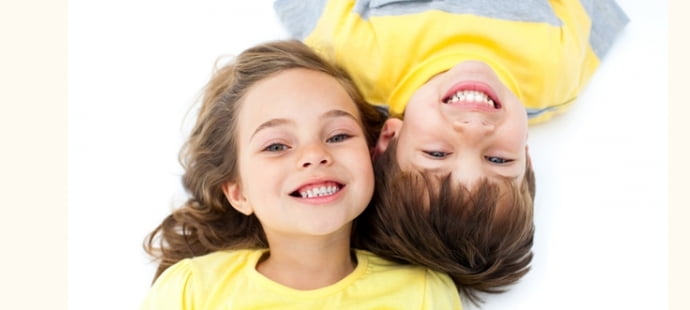
By approaching Sibling Rivalry with patience and a plan, we can turn these messy moments into opportunities for deep social learning.
Decoding the Drama: Why Do They Fight?
Before we can solve the problem, we have to understand the currency of the conflict. On the surface, the fight seems to be about a toy, a video game controller, or who gets to sit in the front seat. However, underneath the surface, sibling squabbles are almost always about one thing: connection and status. Children are biologically wired to compete for their parents’ attention and resources. When a new sibling arrives, or when one child feels the other is getting “more,” their primitive brain perceives a threat to their security within the family unit.
Often, a child who is picking a fight is a child who is feeling disconnected, bored, or unheard. They might be hungry, tired, or overstimulated from a long day at school. In these moments, their capacity for patience hits zero, and their sibling becomes the easiest target for their frustration.
Understanding this helps us lower our own temperature. When we realize the fighting isn’t a sign of bad character or a failed parenting style, but rather a signal of an unmet need or a lack of skill, we can move from “punisher” to “coach.” We stop asking, “Why are you being so mean?” and start asking, “What does my child need right now to feel safe and regulated?” This shift in mindset is the first step toward a more peaceful home environment.
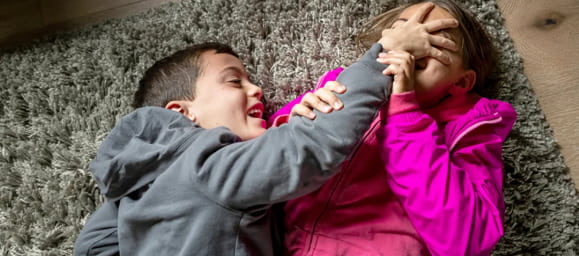
The Trap of Playing the Judge
The most common mistake we make as parents—and we all do it—is rushing into the room to decide who is right and who is wrong. We ask, “Who started it?” or declare, “Give that back to your sister immediately!” While this might stop the noise in the short term, it actually fuels the fire of rivalry in the long run. When we play judge, we inevitably create a “winner” and a “loser.” The “winner” learns that they can manipulate the parent to get their way, and the “loser” feels like the victim, building resentment toward both the sibling and the parent.
This dynamic creates a triangle where the children stop trying to work it out with each other and instead race to see who can tattle to the parent first. They aren’t learning conflict resolution; they are learning how to build a case against their sibling. Furthermore, we rarely see the whole picture. We might see the older child shove the younger one, but we missed the younger one quietly destroying the older one’s Lego tower five minutes prior. Our judgment is often flawed because we only catch the reaction, not the instigation.
Instead of being a judge, aim to be a “sportscaster.” A sportscaster doesn’t take sides; they simply narrate what is happening without judgment. This validates everyone’s experience without assigning blame. It sounds simple, but it is incredibly powerful because it forces the children to look at the situation objectively rather than defensiveness.
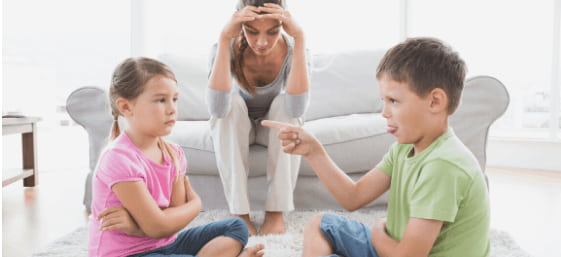
The Power of Neutral Observation
When you walk into a conflict, try describing the scene physically. You might say, “I see two children who are both very upset, and I see one red truck on the floor.” By stating the facts, you lower the emotional intensity. You aren’t accusing anyone; you are just acknowledging the reality.
This pause allows the children to step out of their “fight or flight” brain. Instead of defending themselves (“He hit me!”), they have to process your statement (“Yeah, we both want the truck”). It creates a tiny wedge of space where problem-solving can begin. It signals that you are there to help them navigate the storm, not to strike them down with lightning.
Validating Big Emotions
Once you have described the scene, acknowledge the feelings. “You look furious that your tower fell down,” or “You seem really sad that you can’t have a turn right now.” Often, the fight escalates because a child feels misunderstood. When you articulate their feelings for them, the need to scream or hit diminishes.
Validation doesn’t mean you agree with the behavior. You can validate the anger (“I know you are mad”) while holding the boundary (“But I won’t let you hit”). When both children feel heard by you, the competition for your favor dissolves, and they can start to hear each other.
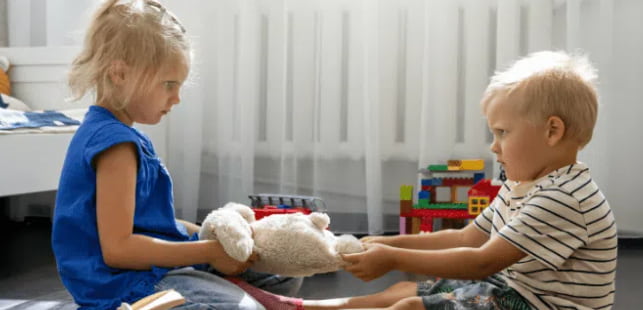
Emotional Intelligence in Sibling Rivalry
Conflict in sibling rivalry is messy, but it is also the most effective classroom for emotional intelligence. Every squabble is a chance to teach empathy, assertion, and negotiation. If we always separate them immediately and send them to their rooms, they miss the lesson. They need guidance on how to express their needs without hurting others. This is a skill that takes years to develop, so repetition is key.
We want to teach our children that anger is a healthy, normal emotion, but aggression is not an acceptable behavior. We need to give them a script. When tensions are high, their vocabulary often disappears. As the positive parent coach, you can supply the words they are searching for. You are essentially translating their screams into sentences, helping them bridge the gap between impulse and communication.
Over time, this practice rewires their brains. They begin to internalize the process: “I feel something, I say something, we fix something.” It moves them away from the physical reaction of hitting or grabbing and toward the verbal reaction of negotiating. It requires a lot of patience from us, but the payoff is children who can advocate for themselves respectfully.
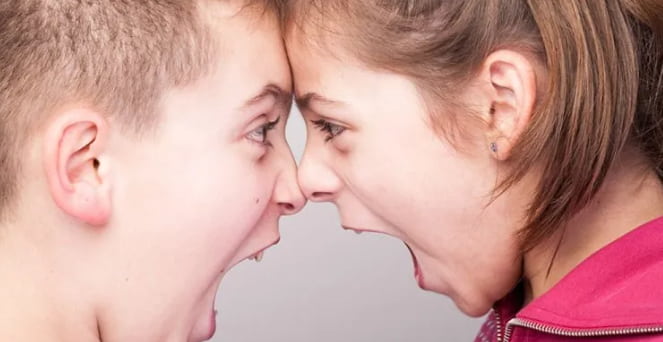
Using “I” Statements
Teach your children to use “I” statements instead of “You” statements. “You are mean!” is an attack that invites a counter-attack. “I feel sad when you take my doll” is a vulnerability that invites empathy. Model this language for them constantly.
You can prompt them by saying, “Tell your brother how that made you feel.” If they are too young or too upset, do it for them: “Brother, Sister is saying she is frustrated because she wasn’t finished playing.” By acting as the translator, you demonstrate healthy communication patterns that they will eventually mimic on their own.
Sibling Rivalry: Brainstorming Solutions
Once the feelings are heard and the calm has returned, ask the magic question: “We have a problem. Two kids want one toy. What can we do to solve this?” This puts the ball back in their court. It treats them as capable problem-solvers rather than unruly subjects.
You will be surprised by their creativity about the solution of sibling rivalry subject. They might suggest setting a timer, trading toys, or playing together. Even if their ideas are silly (“Cut the toy in half!”), write them down or acknowledge them. The process of brainstorming together turns them from enemies into teammates working against the problem, rather than against each other.
Prevention Strategies for a Calmer Home
While we can’t prevent every fight, we can certainly set up an environment that reduces the frequency of sibling rivalry explosions. Prevention starts with recognizing the triggers. Is it always right before dinner? Is it when they have to share a specific type of toy? Identifying patterns allows you to intervene before the first punch is thrown.
- One of the most effective prevention tools is ensuring that each child has their own “territory.” Siblings share genes, parents, rooms, and toys; it can be overwhelming. Ensuring each child has a small space or a special box of items that are strictly theirs—no sharing required—can reduce the anxiety of constantly having to defend their property. It gives them a safe harbor where they don’t have to be on guard.
- Another crucial aspect about sibling rivalry is modeling. Our children watch how we handle conflict with our partners, our friends, and even with them. If we yell when we are frustrated, they will yell too. If we take a deep breath and say, “I need a minute to calm down,” they will learn that self-regulation is a priority. We are the emotional thermostats of the house; if we stay cool, the overall temperature drops.
Filling Their “Love Buckets” Individually
Since sibling rivalry is often a cry for attention, proactive one-on-one time is the antidote. Try to spend 10-15 minutes a day with each child, doing exactly what they want to do. Put down the phone, forget the chores, and just be with them.
When a child’s “love bucket” is full, they are less likely to resent their sibling. They don’t need to fight for scraps of your attention because they have had a hearty meal of your undivided presence. It reassures them that they are unique and valued, independent of their role as a brother or sister.
When to Intervene (and When to Step Back)
Knowing when to jump in is an art form. If we intervene too soon, we rob them of the chance to practice the skills we are teaching. If we intervene too late, someone gets hurt. A good rule of thumb is: intervene immediately for safety, but delay for disagreements.
If there is physical violence or cruel verbal abuse, you must step in firmly to ensure safety. “I won’t let you hit. Hitting hurts. We are separating to keep everyone safe.” In these moments, safety is the only priority; the teaching lesson comes later when everyone is calm.
However, for minor bickering—the “he’s looking at me” or “I wanted the blue cup” variety—try to stay on the sidelines. You can be present without taking over. You might stand nearby and wash dishes, listening. Sometimes, just your presence is enough to remind them to keep it civil.
Conflict Resolution: Shifting the Paradigm
| Conflict Scenario | Traditional Referee Response | Mindful Mediation Strategy | Primary Emotional Benefit |
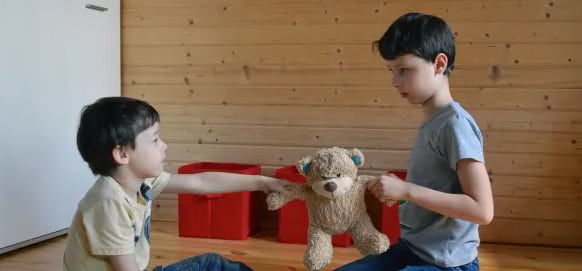
| Fighting Over a Toy | “Give it back right now, you need to share!” | “I see two kids who want the same toy. How can we solve this fairly?” | Develops independent negotiation and critical problem-solving skills. |
| Name-Calling | “Go to your room, we don’t use bad words.” | “Hearing that word hurts. Tell your sibling how you are actually feeling.” | Focuses on emotional root causes rather than surface-level behavior. |
| Physical Altercations | Grabbing the aggressive child and yelling loudly. | Physically separating them calmly to ensure safety before any talking begins. | De-escalates the immediate threat response and models emotional regulation. |
| Tattling / Complaining | “Stop being a tattletale and ignore them.” | “Are you telling me this to get them in trouble, or to get help?” | Helps children differentiate between seeking adult guidance and petty retaliation. |
Frequently Asked Questions (FAQ)
When should I step in to stop a sibling fight?
You should only step in to stop a sibling fight immediately if physical safety is compromised or emotional abuse occurs; otherwise, giving them space to negotiate builds crucial interpersonal skills. Developmental experts suggest observing the conflict from a short distance to assess whether the children are moving toward a resolution or simply escalating the tension.
How can I prevent sibling rivalry from starting in the first place?
The most effective way to prevent intense sibling rivalry is to intentionally avoid comparing your children and to ensure each child receives dedicated, individualized attention daily. When parents highlight one child’s academic success or calm demeanor in contrast to their sibling’s struggles, it breeds deep-seated resentment and a fierce competition for parental approval.
Should I force my children to apologize after a fight?
Forcing a disingenuous apology immediately after a fight is highly counterproductive, as it teaches children to lie about their feelings rather than genuinely repairing the relational rupture. During the aftermath of a heated conflict, a child’s nervous system is still highly dysregulated, making them completely incapable of experiencing true empathy for their sibling’s perspective.